How to Keep Your Mazda Healthy

How to Keep Your Mazda Healthy…

As a car enthusiast, I always want to make sure that my car maintenance is up to date. In general Mazdaโ€™s are very reliable but, whether modified or stock, the life of your car depends on maintenance. Taking good care of your car today can help you avoid paying out more in the future on repairs. Here are the top tips Iโ€™ve collected over the years and have applied to keep my Mazda in tip-top shape. Hopefully, theyโ€™re as helpful to you as theyโ€™ve been to me.

Gasoline โ€“ Find What Works for You

To find out what octane your engine needs, first check your owner’s manual. The recommended level is often 87octane. Some models have high compression engines that are designed to utilize the octane levels of 89, 91 or higher. Ordinarily, your vehicle will not benefit from using a higher octane than is recommended in the owner’s manual. If your engine knocks or pings at the recommended octane level though, you may need higher octane gasoline.

Improve gas mileage with the Mazda 3 Short Ram Intake

Knocking may occur under certain conditions. A small percentage of vehicles may knock because of variations in engines of the same model due to manufacturing tolerances, or because of an unusual build-up of engine deposits. Other factors such as extremely hot weather, changes in altitude or hard driving conditions may also cause knocking.

Are you planning on running alternative fuel for your modified car? More often than not gas alternatives for modified vehicles require tuning. Every owner/tuner has its preference, but keep the following information in mind when choosing between E85 or race gas:

ยท ย ย ย ย ย ย ย ย E85 will generate significantly more power than your typical recommended octane gas, given the same amount of fuel. The burn rate with E85 is faster than standard 87 to 95 octane, plus you get lower temperatures and more power. The downside is that you will get worse fuel economy, and your Fuel Pump will need more regular cleaning.

ยท ย ย ย ย ย ย ย ย The best thing about any race fuel is its consistency. You can count on the performance of the fuel and then tune accordingly. It makes things like elevation changes, ambient temps, etc, easier to incorporate into different maps.

Oil โ€“ Change it Religiously

Change the oil in your Mazda every 3,000 – 5,000 miles depending on the type of (regular, synthetic) oil you use. If most of your miles come from highway driving (driving at a set speed for long intervals of time), you may be able to change the oil every 5,000 miles, but if you do most of youโ€™re driving in a city or suburban area, check your oil every 2,500 miles just to be safe. If the oil appears completely black, this is a sign that you need to have your oil changed.

If you change the oil yourself, remember to change the oil filter as well. If you take the car to a mechanic to have the oil changed, he should change the filter when he changes the oil. I always recommend the OEM oil Filter and Full Synthetic oil of your preference.

Tire Maintenance โ€“ Keep โ€˜em Rotated

Rotate your tires every 10,000 miles to prevent uneven wear (this means the back tires should be moved to the front wheels and vice versa). Also, keep a very close eye on your tire pressure. Mazdas use tires with a very soft tread, which means your car grips the road better, but its tires are more prone to leaks and breakage.

ย Look in your manual to see what the tire pressure of your front and back tires should be, and check all four tires’ pressure once a month to make sure no leaks have appeared.

Air Filter โ€“ It May be Cleaner than You Think

Mechanics will often try to convince you to change your air filter every time you change your oil. However, you shouldn’t have to change your air filter more than once every 20,000 miles unless itโ€™s excessively dirty.

To learn about high-performance air filterโ€™s go to:

ยท ย ย ย ย ย ย ย ย The Best Power Mod for a Mazda –ย  //corksport.com/blog/the-best-power-mod-for-a-mazda/

ยท ย ย ย ย ย ย ย ย High Flow Panel Filter –ย  //corksport.com/blog/product-release-corksport-high-flow-panel-filter/

Transmission Fluid โ€“ Keep an Eye Out

To protect your transmission and keep your car running for as long as possible, have the transmission fluid checked every 40,000 miles. In general, you don’t need to replace it until you hit 100,000 miles, but if you don’t check it and the fluid does burn out, it can ruin your transmission, a job that can cost more than a couple thousand to repair on a Mazda.

To learn about a related transmission topic go to Transmission Inserts at:ย  //corksport.com/blog/the-best-power-mod-for-a-mazda/

Battery โ€“ Inspect it When the Time is Right

As long as you are careful not to leave the light or any other battery-operated extras such as the stereo turned on when your engine is not running, your Mazda’s battery should last approximately three to four years. When approaching the five- to six-year mark, be sure to have it inspected. It is better to be prepared than to have your battery die unexpectedly when you need to be somewhere.

To learn about the ECU Relocation Battery Box, go to:ย  //corksport.com/blog/increase-room-in-your-engine-bay-with-a-new-battery-box/

What If?

As a longtime Mazda enthusiast, Iโ€™ve seen the company evolve in many innovative ways. Most recently, Mazda has focused its attention on improving the current Skyactive Technology lineup, including the SKY-G 2.0-liter gas and SKY-D 2.2-liter diesel engines.

This technology is great for those looking for good fuel economy and better engine output. But what about the enthusiast who, instead of seeking MPG, is drawn to a fun, high-performance vehicle they can enjoy driving 24/7?

Hereโ€™s what Iโ€™m thinking.

Sure, the 2.3 MZR engine had its ups and downs and can be improved by the enthusiasts who own them. But, I imagine something beyond what we have now. Consider this. What if the next lineup of Mazdaspeed 3โ€™s had a 2.5L MZR engine with an upgraded turbo and a High-Performance Fuel Pump (HPFP) to help with the volume and pressure to produce an ideal 320 HP beast that will scare your competition away?

But letโ€™s not stop there. Letโ€™s address the torque steer under acceleration with an all-wheel-drive (AWD) system. An AWD Mazdaspeed3 was shelved years ago; the automaker said the high price point wouldnโ€™t be saleable and the hatchback style wouldnโ€™t be attractive to consumers. But now, hatchbacks are growing in popularity and perfectly positioned to rival any competitor. This creates a great opportunity for Mazda to introduce this next generation vehicle. With that in mind, I ask that today we raise our fists in solidarity for this type of Mazdaspeed innovation.

Mazda. “It Just Feels Rightโ€

Jose Rivera – Mazda Community Blog

Check out the latest Mazdaspeed 3 performance parts

Lower Prices, More Power, and White Silicone!

White Silicone is HERE!

After a few teasers, and much demand, we finally are releasing White Silicone Options for the following parts.

So if you want a unique look or a car color matching intake, the White Silicone option just might be for you!

Looking for an intake?? Looking for a sale?? We’ve got both!

CASH

We already know that the CorkSport Short Ram Intake is the best in the game, but what could make it better? How about a lower price for Xmas? If you haven’t noticed our price drop on the CorkSport Stage I Short Ram Intake, Stage II Short Ram Intake or Cold Air Intake for the Mazdaspeed 3, Mazdaspeed 6, and Mazda CX-7 then take a look!

Installation help is on the way!

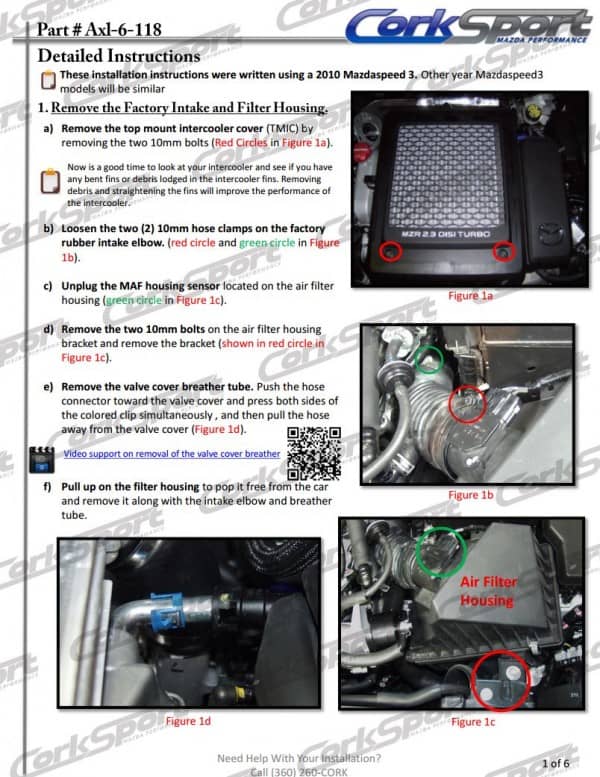
We are constantly searching for ways to improve your experience with CorkSport. Many times we re-visit our parts to see what we can do to improve them; lately we are also starting to turn our attention to improving the instructions that our parts come with. You’ll notice the change starting with our latest products and also some of your favorites. We recently upgraded the instructions for all of our Mazdaspeed 3 intakes to fill them with more pictures and easier to understand steps. Here’s an example:

Instructions

ย As you can see, the pictures are full color with easy to find call-outs of key items and steps. In addition to coming printed out with every CorkSport part, you will find them easy to link to on every product page and easily viewable on any computer, tablet or phone. Just one more way that CorkSport has your back!

Fuel Pump Comparison Part 4 (Bombs Away!)

We know by now that adding power to your Mazda is fairly straightforward up to a certain point. However, sooner or later, that hunger for power means youโ€™re going to need to step up to a new fuel pump that can flow more fuel. By seeing that most of the fuel pumps on the market were largely the same, we decided to see what kind of innovations we could bring to the table. At this point we had learned volumes about the pumps on the market through our research and decided to engineer a new set of pump internals that focused on everything that we had learned.

Fuel pump testing

We know this is possibly the worst kept secret since Area 51, but we started engineering fuel pump internals over 2 years ago and we aim to show you why ours is worth the wait.

We didnโ€™t just set out to make another pump; the market has plenty of those. We set out to make the best Mazda fuel pump upgrade on the market specifically for Mazdas from a company that ONLY makes parts for Mazdas.

We started by researching many different technologies and engineering ideas in the pressure ranges experienced in these fuel pumps. We purchased every kit on the market and a brand new replacement from Mazda to test. The results from some of those tests can be found here (Link to blogs 1,2, and 3). After agreeing that 9.8mm was the maximum size we could attempt for the piston without making the sleeve wall too thin, we could start engineering the rest of the part.

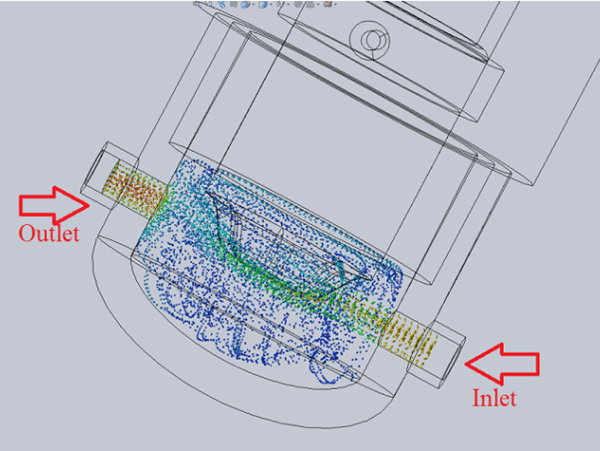
We then built all the internals available in SolidWorks and tested the efficiency of them all for flow design and volume. This was merely the beginning of our design phase but helped us realize many great ideas (as well as a few not so great ones). We ended up with a design unlike any other on the market that, according to the data, would be more efficient than anything on the market.

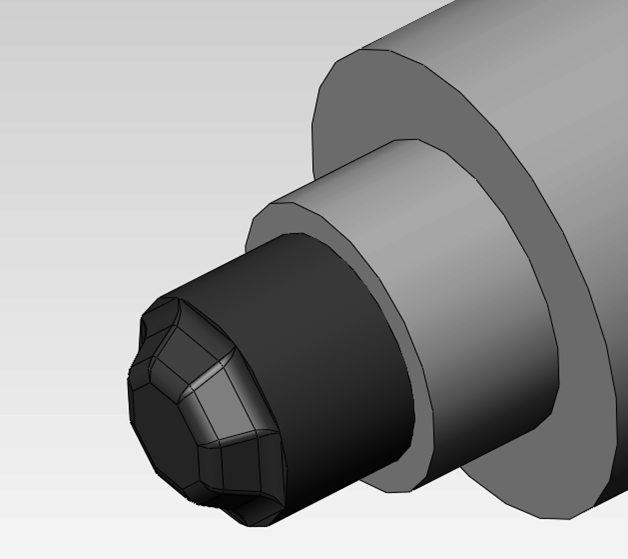
Fuel pump piston

With the increase in flow and efficiency we knew that our design could also benefit from a stiffer spring rate for the pump. That would enable higher RPMโ€™s and improved cam wear over the life of the pump. Since we would be flowing more, the pressure on the pump would be greater than ever, the stiffer spring was just good insurance to get the power we needed even past the stock redline.

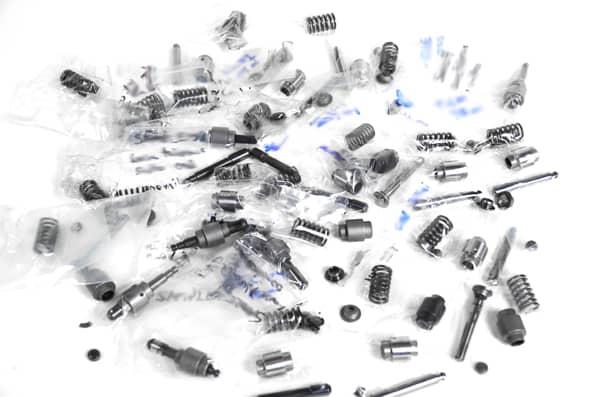
CorkSport Fuel Pump Internals

During our testing we also discovered the keeper assembly used by the factory is no accident. Many of the other pumps on the market use a keeper system similar to an intake or exhaust valve. This style does a fantastic job of locking the piston in place, but creates a few issues of its own. Because of the flow of fuel, the piston rides one side of the sleeve more than the other; over time, this will wear more into the piston which will affect clearances and efficiency. To prevent this, the factory style keeper allows the piston to spin as the spring moves up and down. That led us to choose the factory style retainer. We didnโ€™t want to guess on either design without proof of our theory so we produced samples of both styles to prove wear differences and address installation challenges related to both styles.

Now that the cat is out of the bag, weโ€™ll have just one more fuel pump blog next week with a very exciting limited offer. Stay tuned as CorkSport is about to take Mazda performance one step higher!

Representing CorkSport Mazda Performance

Representing CorkSport Mazda Performance.

Since starting here at CorkSport HQ, I find myself searching the lanes of traffic for Mazdas. I canโ€™t deny that it gets my heart pumping a little bit when I see a Speed3, but thatโ€™s merely because I have a preference for them and the โ€œzoom-zoomโ€ effect.

What keeps me looking is that I donโ€™t always see Mazdas of what Iโ€™ll call the โ€œproper persuasionโ€. It may just be a Pacific Northwest thing, but there are a lot of sexy performance cars roaming the streets disguised as family vehicles. Now donโ€™t get me wrong, a family car is always necessary, but after seeing what the enthusiasts are capable of, I get a little disappointed when I donโ€™t see a CorkSport branded vehicle behind every Mazda emblem.

Over Labor Day weekend I was driving home from camping and having a conversation with a fellow car enthusiast (heโ€™s into Mitsubishis, yuck) about how often we see cars โ€œreppingโ€ their favorite performance brand. He was actually doing a great job of making me defensive, saying that heโ€™d never seen a good looking performance Mazda. He said it was a rare occurrence out here to see a clean/stance one and then for it to also be repping CorkSport, โ€œlike seeking unicornโ€™sโ€. I was disagreeing with all that I had, and yes I mean that in reference to volume control.

We were in a deep, what Iโ€™ll refer to as an, โ€œelevated and passionateโ€ conversation, when low and behold, there in the lane just left of us, was a tiny 6โ€ decal on the back right of a very clean Speed3 (Gen2). A perfectly pitched screech of โ€œTOLD YOU SOโ€ bellowed from my mouth, followed by a quick cell phone pic and a good long laugh at how โ€œI (Kim) am always right, get used to it.โ€

Bloogggoooo2Bloogggoooo

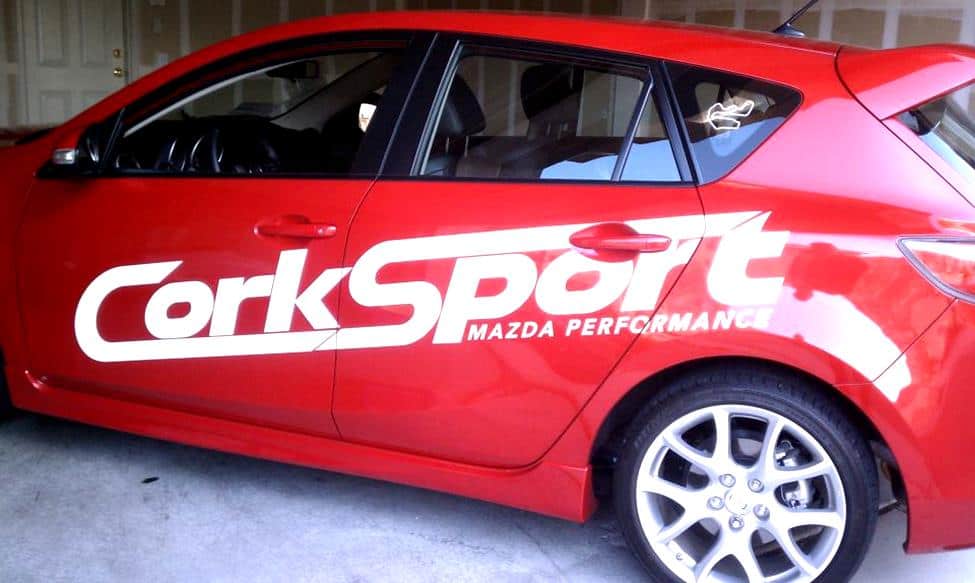
Since then, we have found and rewarded the owner of this beautiful beast https://www.facebook.com/photo.php?fbid=10151905810739257&set=a.317272679256.181853.126409094256&type=1&theater, but it got a great conversation going in the office of โ€œwhere is the best spot to place a decal?โ€

So, this is the question I pose to you, our readers:ย ย  โ€œWhere do you think is the perfect spot to rep your favorite performance brand?โ€ I prefer them to go along with the elegant lines of the car, but others say that having them stand against those brings a slick look as well. What do you think?

Here are some of the pictures that we have seen the in past, please feel free to post yours so we can check it out!

ย  ย CorkSport-Blog-Decal-Sticker-Reward-Repping-Mazdaspeed-Mazda-3CorkSport-Blog-Decal-Sticker-Reward-Repping-Mazdaspeed-Mazda-3-6-CX5-2

CorkSport-Blog-Decal-Sticker-Reward-Repping-Mazdaspeed-Mazda-3-6-CX5-20

Canโ€™t wait to see what you all show us!

Sincerely yours,

The very passionate and boisterous CorkSport Customer Service Representative,

Kim

Inside the upcoming CorkSport Blow Off Valve

When you look at the blow off valves (BOV) and bypass valves (BPV) on the market today you see many examples of the same thing with little to no innovations. For those of you that aren’t aware, BOV’s and BPV’s are valves that vent pressurized air in the tract between the turbo and the throttle body. This prevents the turbo from suddenly stopping or slowing as those can cause unwanted bearing wear on the turbo. A BOV vents this pressurized air into the atmosphere (into the engine bay). A BPV vents that air back into the intake just after the mass air flow (MAF) sensor. Venting back into the intake allows the ECU to correctly meter that air that it has already accounted for. Many times when venting to atmosphere you can get a momentarily rich condition because the ratios are off.

We were talking about innovation though, the last great innovation in valve technology for turbos was probably years ago with pull type valves like the SSQV from HKS. Many years have passed since then and not much has changed, outside of the few valves that partially vent to atmosphere and route the rest back to the intake tract. Typically now you just see one copy after another of someone else’s idea. SURE, it can be hard to innovate in the blow off valve market but we were convinced there was something exciting we could do.

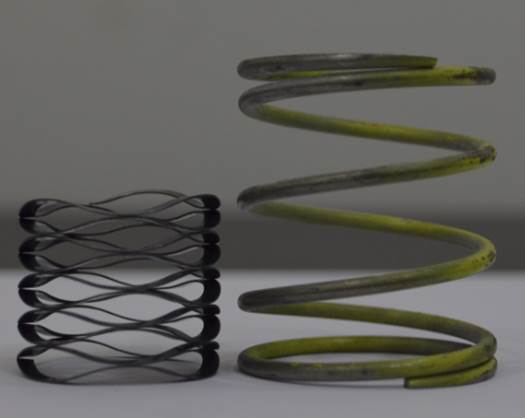
We speak often about your ideas sparking our innovative minds, this project was started by just one of those customer suggestions. We started with a customer submission of using wave springs that led us to design a new valve design to reduce the size and weight of the moving parts.

Key Features of the upcoming patent pending CorkSport Blow Off Valve:

Reduction of spring height ย Corksport Blow off valve 1

With the use of a wave spring we are able to reduce the spring height by 50%. The traditional spring sits at 40mm and the CS wave spring sits at a 20mm height. These springs both provide the same force and will move the same distance before experiencing coil-bind.

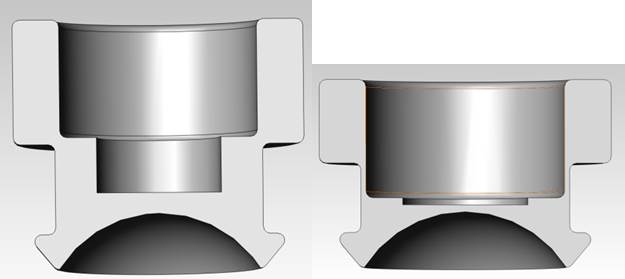
Reduction of piston size

Corksport blow off valve 2

Because the spring is 50% smaller we are able to reduce the piston and still maintain the same amount of movement. As you can see, just changing to the wave spring we were able to decrease the piston by 33%!!!

What does that all mean?

The reduction in mass is all well and good, but just being smaller isn’t the only benefit (even though that is pretty cool). With the force (F) being the same and the mass (m) decreasing by 33% we can see how the mass relates to acceleration (a) in the formula F=ma. Rearranged, this becomes a=F/m. This means we have accelerated the actual speed of the valve, which means the valve is able to react much faster than a larger valve with a traditional spring (33% faster!) Because the blow off valve is a safety feature to protect the turbo from premature wear, this increase in acceleration can help increase the longevity of the turbo and the system as a whole.

What does all this innovation look like?

Corksport Blow off valve 3

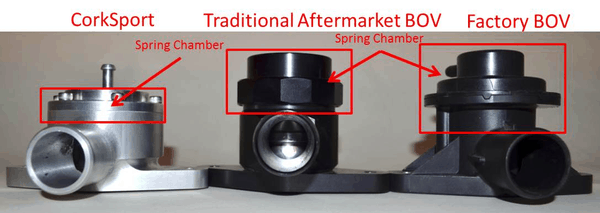
With the reduction in the size of these key parts, we can reduce the body size. This can be especially helpful in situations with airboxes, custom turbo and intercooler kits or even in universal situations where space is at a premium. Below you can see a comparison of similar BOV’s, the spring chamber on our design is significantly smaller but the function is not lost; in fact, we improved it!

Corksport blow off valve 4

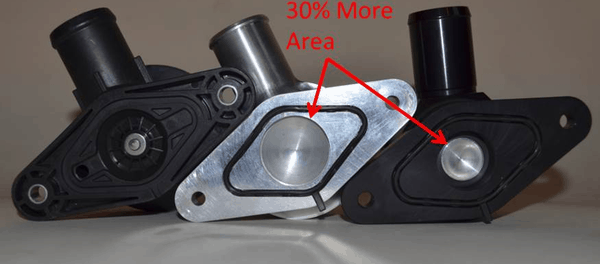
To maximize flow, we pushed the piston area out to ensure a larger venting area, this reduces the time it takes to vent the air and allows larger turbos to vent more efficiently. As a blow off valve, this certainly pushes the envelope, we think we can find even more applications for this kind of innovation. We are very proud to be able to offer things for the Mazda market we helped create and will continue to engineer parts that push the scene for you.