2021-up Mazda 3 Turbo and CX30 Turbo Intake Heat Shield

Cold air vibes for your Mazda 3 turbo

Have you been waiting for the CorkSport Heat Shield to go along with a CS SRI to snag one? Well you donโ€™t have to wait any longer because the CS heat shield is here! Whether you have the CS SRI already or want to get both at the same time, the CorkSport Heat Shield for both the Mazda 3 and CX-30 with the SkyActiv 2.5T is a great mod to include in your build. Keep on reading to see how the CS Heat Shield is able to achieve lower intake air temps that allow your motor to make power easier.

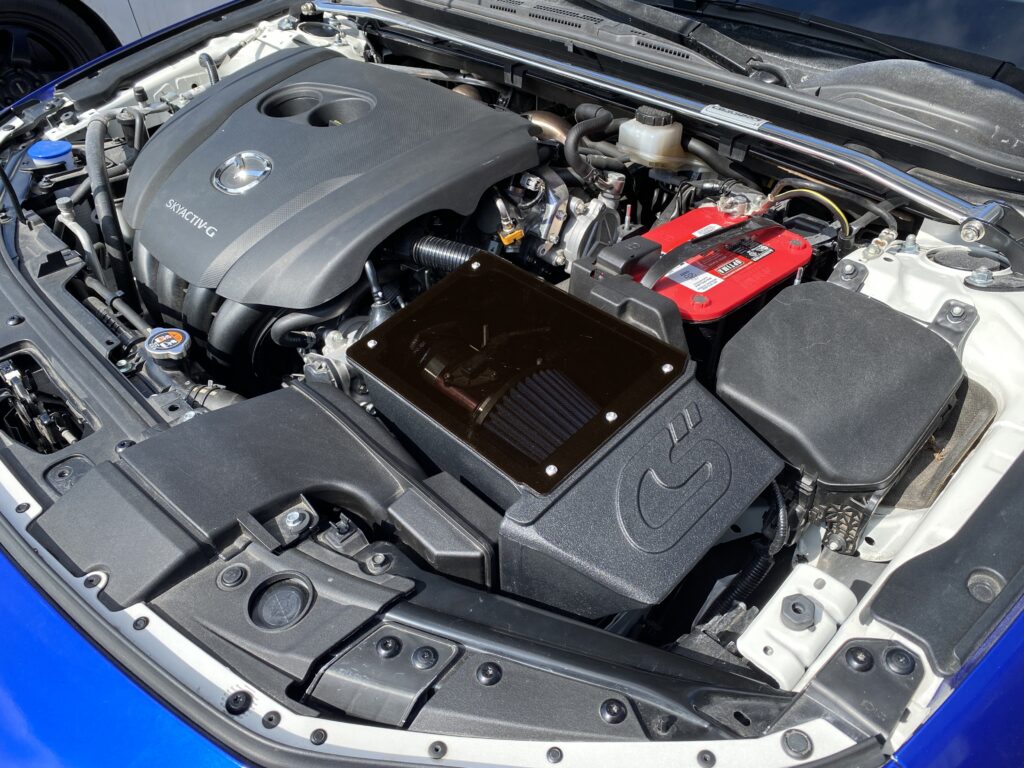
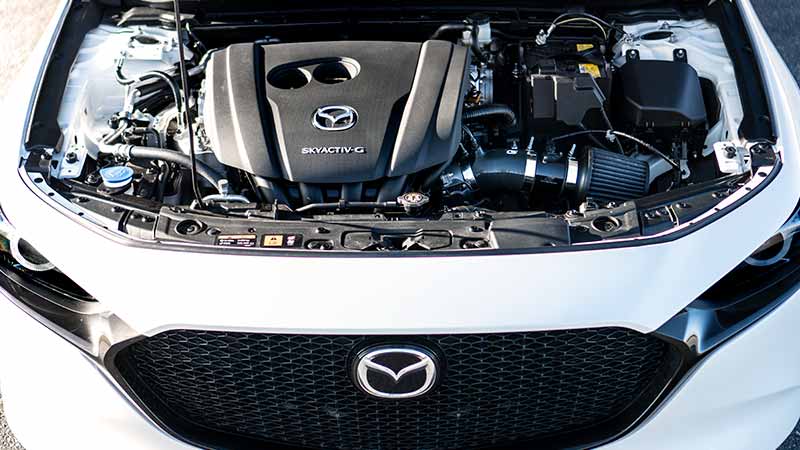
Mazda 3 turbo engine bay intake heat shield

For the Mazda 3 Turbo Heat Shield our main focus was keeping cool air supplied to the filter. The shield was designed to seal off the intake from as much heat produced from the radiator, engine and transmission as possible. This lead to a multiple piece design that is riveted together which allows us to utilize the OEM air ducting which supplies cooler outside air to the filter. The shield does not fully surround the filter because we have also found that there is cool air that also comes from the area in front of the tire and underneath the headlight while driving, helping to ensure that your intake sees as much cool fresh air as possible.
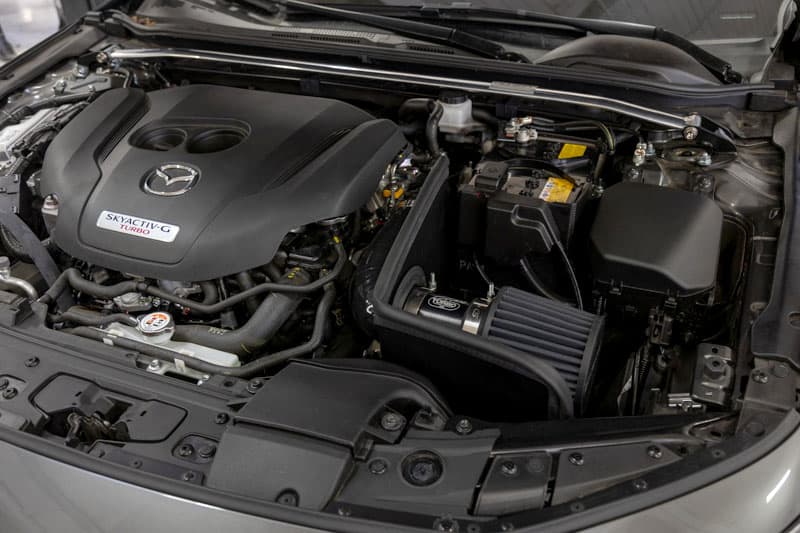
Mazda Cx30 Performance Intake Heat Shield

Now with all of this cooler air being supplied, how does it help performance? The basic concept is that since cold air is denser than warm air, your engine gets more air per cycle, and thus allows more fuel to be added to make more power. However, when a car is turbocharged, the process is a little more complicated. A turbo compresses and heats up your intake air and then sends it to an intercooler that cools the air back down. What that means is that the โ€œcolder air will make more powerโ€ generalization may not be as significant, especially with the advancements in modern turbocharged vehicles. Colder intake air does offer a benefit in the form of less stress on your turbo system. This means that your turbo does not have to work as hard to flow the same amount of air at the same boost pressure. Also a reduction in intake air temps can translate to slightly cooler air exiting your turbo compressor, which helps take some stress off the intercooler as well.

Mazda 3 turbo cold air intake heat shield installed

With all of the theory covered, letโ€™s get to the real world results! In daily driving testing we found decreased intake air temps with the CorkSport Heatshield installed. When cruising or when itโ€™s cold outside, we were actually surprised at the low intake temps of the CS SRI aloneโ€”thereโ€™s actually a surprising amount of fresh air that gets into the engine bay. Where the heatshield really comes into its own is when sitting stationary or driving on a very hot day. Thatโ€™s when we saw our biggest improvements in intake air temp.
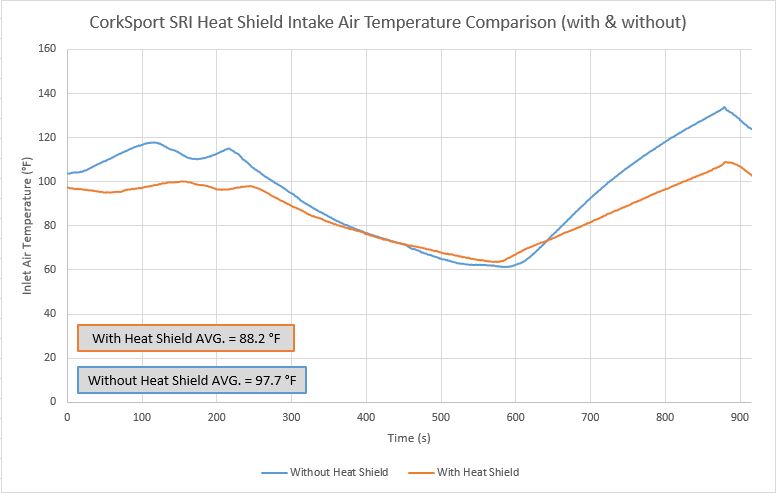
3 cold air intake heat shield test data

Lastly about the manufacturing, the CorkSport Heat Shield is made out of carbon steel that is laser cut and precision formed. Carbon steel was selected for its strength and lower heat transfer over aluminum. To fight off corrosion, the heatshield is powder coated wrinkle black and gives the heat shield a great look that helps it blend in with the other parts in the engine bay. Both sections of the shield are attached together using stainless steel rivets for corrosion resistance and a nice look. Lastly, we include rubber seals along the top edge of the CS Heat Shield to keep as much heat out as possible, and to prevent any unwanted vibrations or noise.

Mazda 3 turbo cold air box

If youโ€™re looking to complement your CS SRI with some added heat protection or want to pick them up together, check out the product listing for the CorkSport Heat Shield for additional photos and video! Also, feel free to contact us with any questions you might have.

Cold Air Intake Systems Explained for your Naturally Aspirated & Turbo Mazda

Mazda 6 Turbo Performance Intake

Cold air intake systems, are they necessary? Are they worth the extra cost? Does it matter if the engine is turbocharged or not? Will the engine or its performance be hurt without one? We have repeatedly seen these questions on forums and social media groups regarding Mazda’s 3rd and 4th Generation Mazda 3 & 6. To help the Mazda community grow and learn about their cars and what to do with them, we have written a blog that we hope will help shed some light on these questions and others. 

Mazda 3 Turbo Short Ram Intake

Most importantly, you will NOT hurt your engine if you use an SRI only on Turbo or Non-Turbo applications.  

What are the typical intake systems available for your Mazda? At CorkSport, we have two primary intake system setups: Short Ram Intake (SRI) System and Cold Air Intake (CAI) System. It is essential to distinguish between the two because you (the Mazda enthusiasts) will ultimately decide which system to use. 

Short Ram Intake (SRI) System

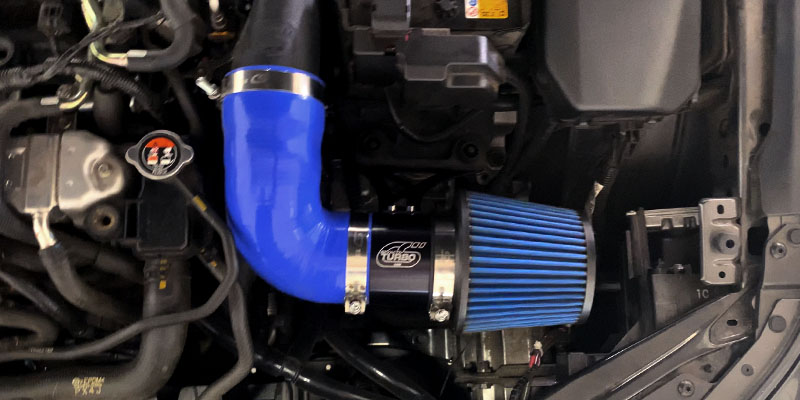
This CorkSport system consists of a filter, billet MAF housing, silicone coupler, a few clamps, and may or may not have a mounting bracket (depending on the application). This system is efficient and straightforward (an unrestricted airflow path increases power). This system removes the factory airbox and snorkel (optional). The cost is very effective for the results and provides excellent induction sounds. 

Mazda 6 Turbo Performance Intake

Cold Air Intake (CAI) System

Mazda 3 Cold Air Box for a complete cold air intake system

CorkSport’s system consists of the SRI (as mentioned above) plus a heat shield or airbox designed to keep the engine bay heat away from the intake system’s inlet and help direct cold air induction. This system removes the factory airbox and may or may not reuse the factory snorkel. The cost will be higher than a short ram intake due to the additional components involved and may muffle some of the induction noises but provide better heat control.

Mazda performance air intake heat shield

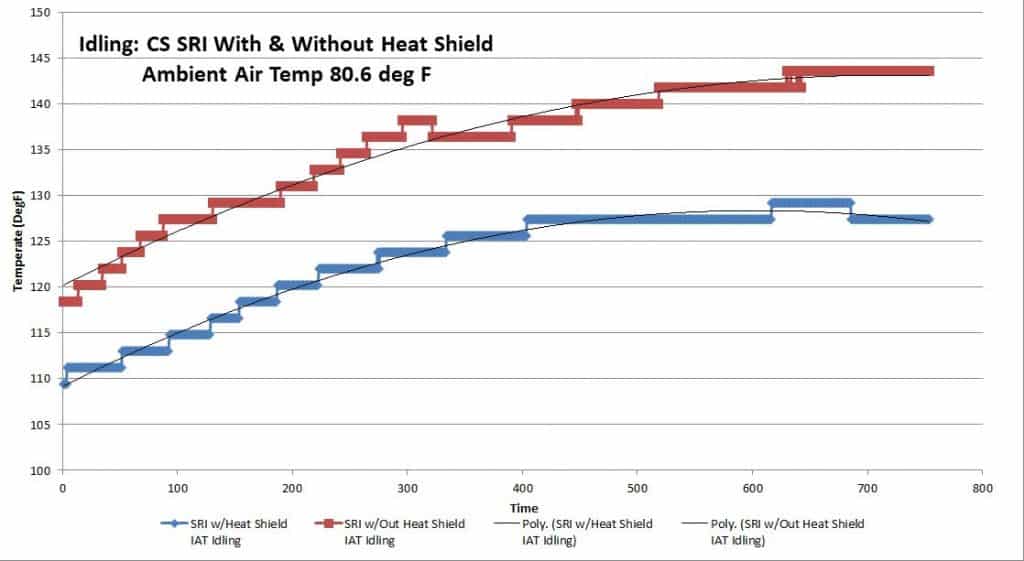
OK, is a Cold Air Intake System worth the extra cost and complexity? Does it do anything? Well, in our opinion, yes and no. We have tested this, and we have proven that a heatshield does improve (read reduce) “heat soak” of the intake system, BUT not in the ways most people expect. Below is some data from our 2018 Mazda 6 Turbo SRI and then also with our SRI + Heat Shield:

Mazda SRI Dyno without a heat shield

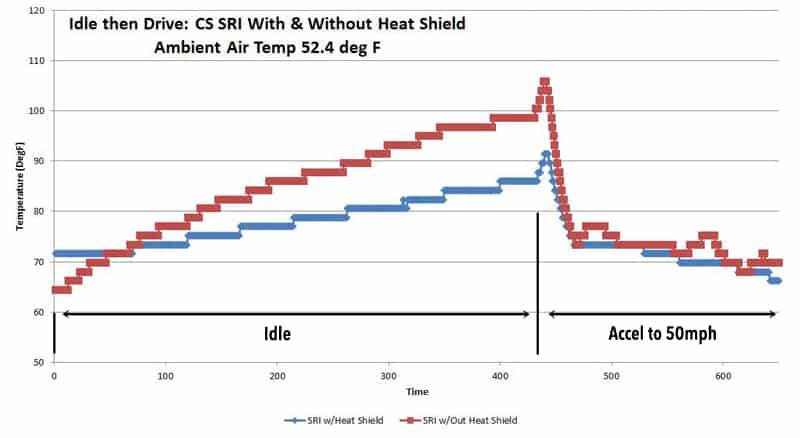
This first graph shows the vehicle idling for a period of time, much like sitting at a stoplight or in traffic. The red graph shows the short ram intake only, and the blue chart shows the SRI+Heat Shield. It’s pretty apparent the heat shield is helping reduce the amount of engine bay heat being ingested by the intake while the vehicle is sitting. The maximum temperature delta is approximately 15-20deg F. That’s a respectable improvement, and this lower amount of heat soak should, in theory, improve the vehicle’s acceleration from a complete stop. Now let’s look at a graph that combines idling and acceleration up to 50mph

Mazda Dyno with Short Ram Intake

The second graph indicates similar data for the stationary idling period, but more importantly, is what the data tells us once the vehicle starts moving. You see a small spike for both systems (this is due to the engine suddenly ingesting more air), then you see the air temp drop rapidly as the vehicle increases in speed. The vehicle’s forward motion/speed is important because that is how fresh cool ambient air enters the engine bay.

You’ll notice that both the red and blue graphs meet at the same point after the rapid cooling then have a small amount of fluctuation. In a nutshell, both the SRI and SRI+Heat Shield perform about the same once the vehicle is moving. Again, they perform almost identically once the car is rolling.

Mazda Short Ram Intake with Heat Shield Installed

Next question, does it matter if the vehicle is turbocharged or not? Before we answer that, let’s go over the differences between turbocharged and non-turbocharged systems. 

Turbocharged

The engine is equipped with a turbocharger and an intercooler system to cool the boosted air temperatures before entering the engine. The intercooler system is required to negate the by-product of turbocharging an engine (and thus boost), which is heat. The airflow path is intake -> turbo -> intercooler -> engine.

Short ram itnake system with turbo inlet pipe in blue on Mazda

In a turbocharged engine, the turbocharger superheats the cooler air it receives from the intake before passing it to the intercooler. The boosted air exiting the turbo is substantially hotter than the ambient air temperatures in your engine bay before it enters the intake – especially true while the vehicle is moving.ย ย ย ย 

More focus is typically placed on performance improvements of the intercooler system because that is the primary method to cool the incoming boosted (read “hot”) airflow before it enters the engine.

The use of a Turbo cold air intake system has little effect on the resulting boost air temps, but it will help reduce initial Intake Air Temps (IATs) before the turbo superheats the air and sends it to the intercooler.

This is precisely why the Mazdaspeed platform focuses on increasing the intake size (ingesting more air = more power), adding a larger turbo (more boost), and increasing the size of the intercooler (additional surface area for cooling) coupled with a professional tune to maximize power.

Non-Turbocharged

The engine is not equipped with a turbocharger and, therefore, does not require an intercooler system. The airflow path is more direct and does not have a cooling system built-in; intake -> engine.  

Have a Non-Turbo with our SRI – Check out our new 2019+ Mazda 3 Cold Air Box to keep temps cool!

Since there is no intercooler to cool the incoming air (it’s not needed), the best way to improve air density and performance is with cooler air entering the engine directly. So, a cold air intake on a non-turbo engine can be helpful – especially in warmer climates. 

2019 Mazda 3 short ram air intake

Let’s Recap: 

In either turbo or non-turbo applications, a heat shield or CAI system will provide varying degrees of benefit in some driving situations. For a turbo application specifically, the usefulness of the CAI system tends to be marginal due to the turbo heating the air it receives from the intake. Instead, investing in a short ram intake and performance intercooler system is a much better plan.ย ย ย 

For the non-turbo applications, a cold air intake system is a worthwhile investment because the airflow path is so much more direct, and it’s the only way to help reduce intake air temps and thus increase air density which equals power.  

We hope this has been a helpful and educational blog and lends support as you decide the right path for you and your Mazda! Thanks for tuning in!

Connect with us

You may also Like

Stay up-to-date on the latest news and product updates from CorkSport.

* indicates required

2019+ Mazda 3 & 2020+ CX30 – License Plate Relocation Kit is here!

Mazda3 License Plate Kit

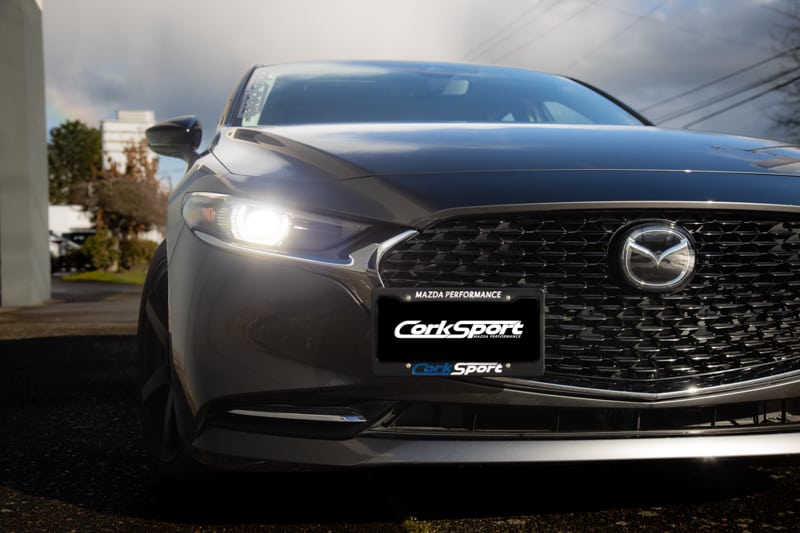
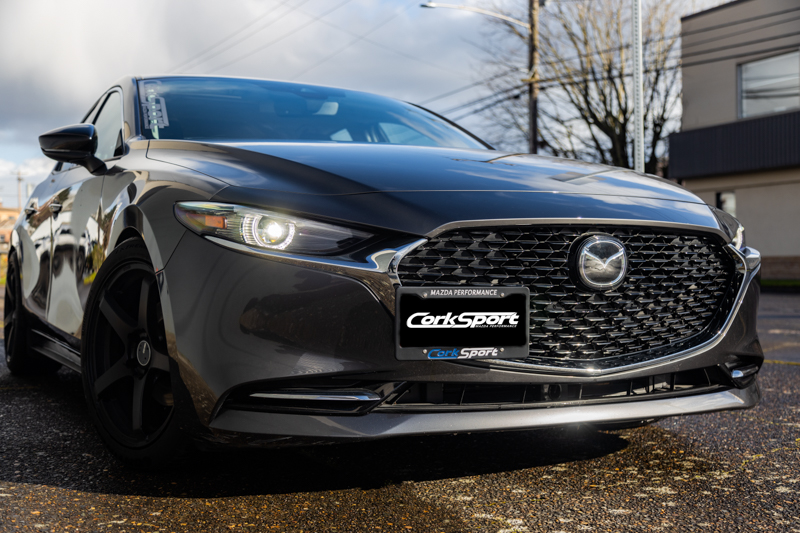
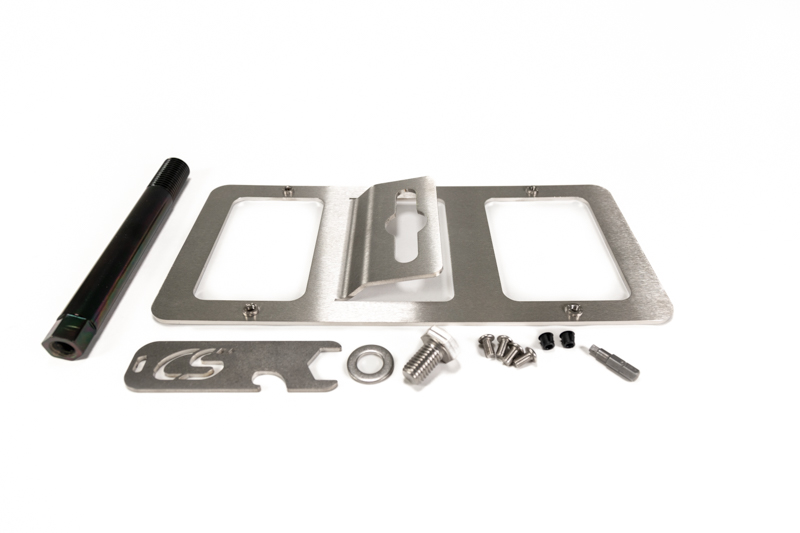
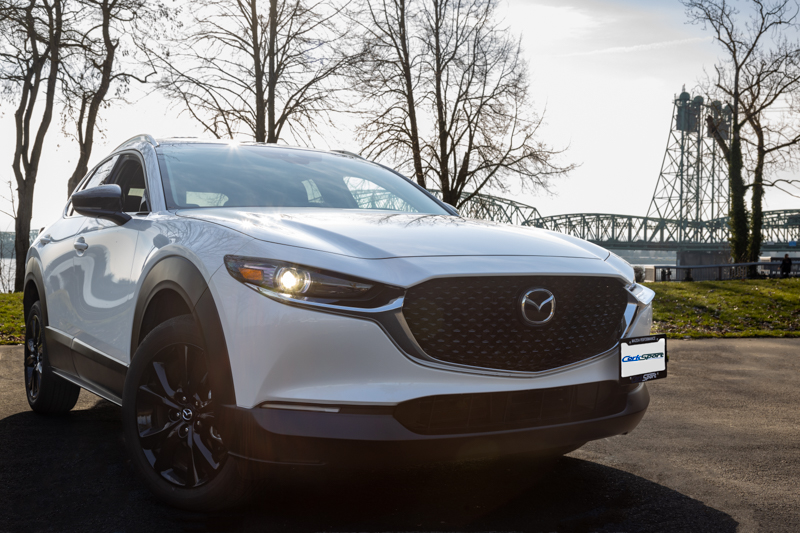
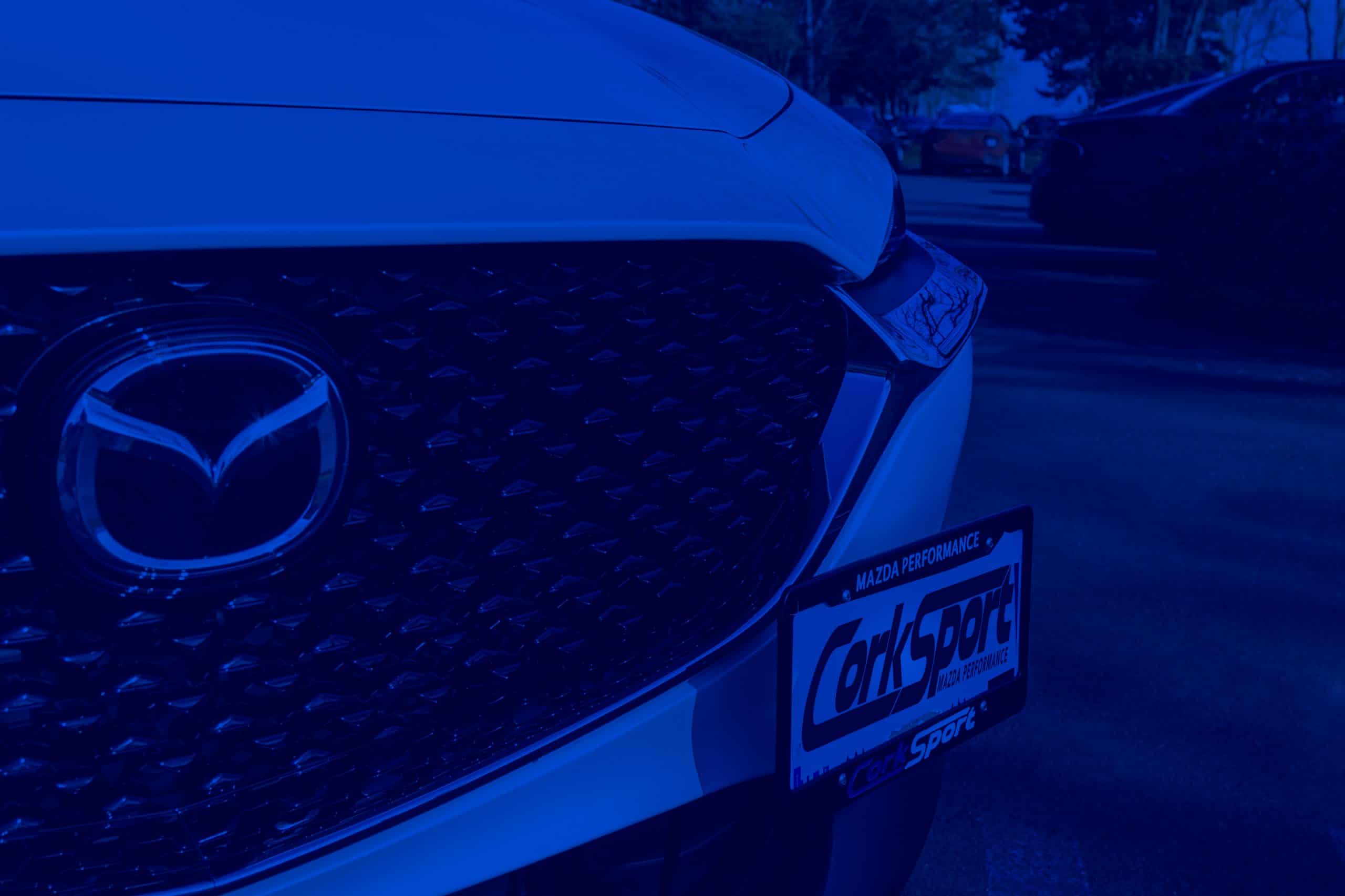
If youโ€™re looking for a quick and easy mod to boost the appearance of your 4th Gen Mazda 3 and CX-30, the new CorkSport License Plate Relocation Kit is a great place to look. The factory front license plate location is front and center which detracts from the aggressive front grill of the 4th Gen Mazda 3. The CS relocation kit moves the front license plate out of the center of the grill and over to the side for an overall better look. A comparison between the factory and CS license plate locations can be seen below. The CS relocation kit is also super simple to install and takes only 15-30 minutes to complete. Read on for a detailed look at the components included in the Mazda 3 License Plate Relocation Kit.   

First letโ€™s take a look at the tow hook screw that is used to hold the license plate bracket. The tow hook screw is made out of high strength steel and zinc coated so that it will hold up in all types of environments. The tow hook screw also utilizes the factory mounting location to avoid any permanent modifications to the front end of your Mazda. Now onto the main component of the CS kit which is the license plate bracket. Starting out as an 11 gauge 304 stainless steel sheet the bracket is bent to provide quick access to the main mounting bolt and to also flow better with the lines of your front bumper. The license plate bracket includes a quick detach feature so if you ever need to run through a car wash you can quickly loosen the bolt with the provided low profile 19mm wrench and lift it up and off.

We have also positioned the license plate bracket out of the view of the parking sensors so everything continues to work as it should. Finally, all of the hardware included in the kit is stainless steel and we provide tamper resistant screws to hold on your license plate so itโ€™s more difficult if anyone tried to remove it.    

Thanks for checking out the CorkSport License Plate Relocation Kit for the 4th Gen Mazda 3 & CX-30! Be sure to head over to the product page and scoop one of these up if you want an appearance boost for the front of your Mazda.

Relocation License Plate blue overlay

License Plate Relocation Kit

Get the license plate relocation kit for the 2019+ Mazda 3 & 2020+ CX30

License Plate Relocation Kit

Get the license plate relocation kit for the 2019+ Mazda 3 & 2020+ CX30