If you are on the forums or Facebook groups, youย have probably seen the โI smell gas under the hood of my speedโ post by that personย trying to troubleshoot their car. Then, 10 minutes later, they post again announcing the stock hardline from the pump to the rail has cracked on their speed. And now they have to visit the dealer to get a new one, which will likely fail in the same manner.
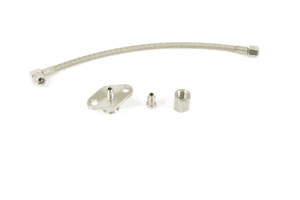
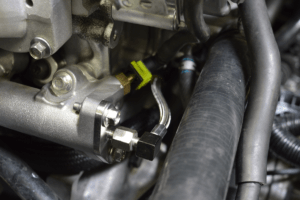
We grew tired of seeing the same thing come up, so we are happy to announce a solution the CorkSport Braided High Pressure Fuel Line. ย The line provides a durable and reliable solution to the crack-prone OEM hard line that loves to leave you stranded.
We made our line out of 314L stainless steel fittings with a SAE100R14 Stainless Steel Braided PTFE for excellent pressure, corrosion, and temperature limits. The Polytetrafluorethylene (PTFE) and Stainless Steel have excellent properties that make our line compatible with gasoline (petrol to our UK friends), ethanol (for all you E85 junkies), methanol, and beer (we do not recommend running your car on beer, but if you need a straw in a pinchโฆ).
Our lines wereย yield tested to 7100psi before a failure occurred in the form of a small leak, which is a safety factor of 3.2 for an OEM fuel system at its limits.
This is one of those parts that is a must buy, not just a nice-to-have. Fuel fires are nothing to mess with.
New Product: Mazdaspeed High Pressure Fuel Line December 17th, 2018Derrick Ambrose
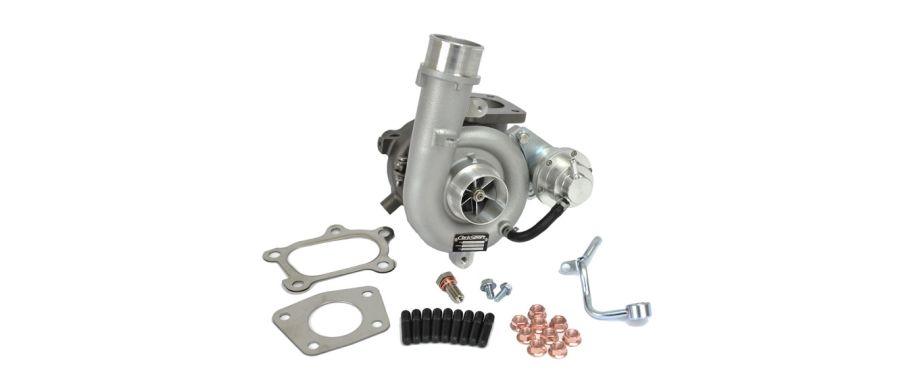
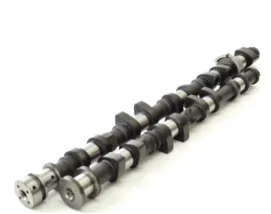
After multiple years of testing, design and research, CorkSport is proud to announce its release of camshafts specifically designed around the MZR DISI platform. This kit is engineered to reliably provide increased power and torque without lower rpm sacrifices.
The turbocharged MZR DISI engine was first introduced in the 2006-2007 Mazdaspeed6 and was later put in the 2007-2013 Mazdaspeed3. This engine has a High-Pressure Fuel Pump (HPFP) that is driven off the intake camshaft. Other MZR engines use different camshafts and donโt have a HPFP lobe to run the fuel pump. This has been a limitation in the market since the engines introduction.
Camshaft Basics
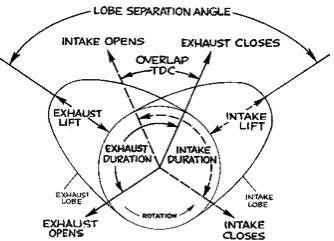
In order to understand the basics you need to know some camshaft terminology. The most common terms are lobe, lift, duration and base circle.
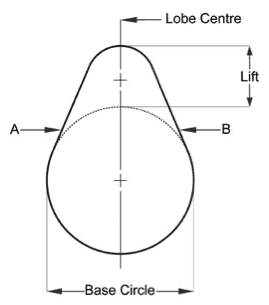
Common Drawing of Camshaft Terminology
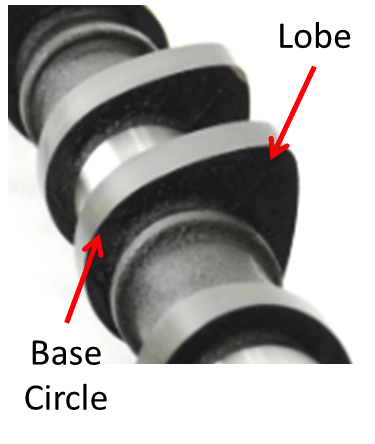
Base Circle โ The circle on the backside of the lobe. When the base circle faces the valve the valve is closed.
Lobe โ The lobe is the portion of the camshaft surface that is not the base circle. This is when the valve is opening or closing.
Lift โ The distance between the base circle and the top of the lobe. This will be the amount the valve is allowed to open.
Duration โ The distance, in degrees, that the camshaft is in the lift section. This controls the time that the valve will be open. This is shown in the diagram from A to B.
MZR Flow Testing
The first thing to do was flow test the head to figure out where restrictions might occur. To flow test, a constant vacuum was applied through the head and while slowly opening the valves. This is similar to what the engine is doing while running.
Intake lift
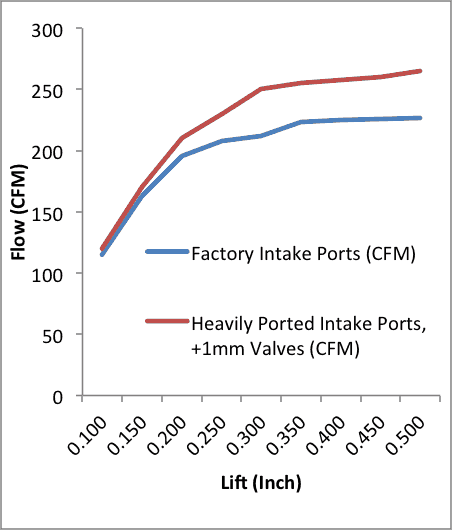
The factory intake ports do not flow much air above 0.350โ of lift on the flow bench. The factory camshaft runs rough at 0.370โ of lift. Shown in the graph below, minimal flow was increased between 0.350โ and 0.400โ on the factory head.
Intake Ports of MZR DISI Head
Porting is the process of modifying the intake and exhaust ports of an internal combustion engine to improve the quality and quantity of the air flow. After porting the head, there were significant increases in flow, but around 0.400โ of lift there was again minimal increase in flow, with more lift. Testing suggests a proper maximum lift of 0.390โ for the intake camshaft. Factory heads or ones with a large port should show gains from this increase in lift.
Why Stop at 0.390โ?
More lift above 0.390โ would require very extensive head work to gain much more power. Another downside of going above 0.390โ lift is the valves will require stronger valve springs to maintain proper valve operation at high boost or high rpm. Upgraded valve springs should not be required for a factory head with 0.390โ of lift camshafts.
Exhaust lift
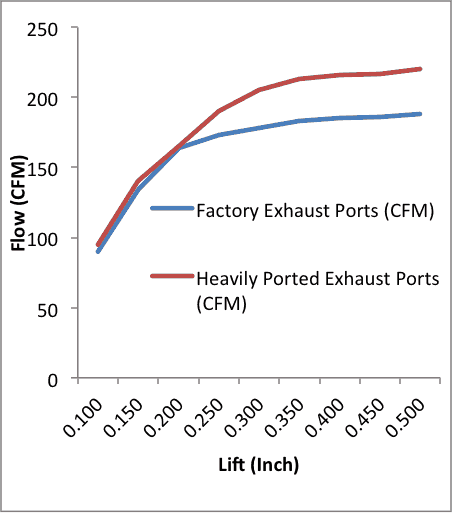
A similar process to that described during the intake lift process was used on the exhaust ports and an optimal lift of 0.355โ was chosen. For comparison, the factory runs 0.321โ lift on the camshaft.
Exhaust Ports of MZR DISI Head
Limitations of Existing Options
The factory camshafts were designed around a compromise of performance and emissions; from that design criteria, there is still more power and torque available. The reader can now understand why increased lift and duration can release this power. There are limited options to increase lift and duration on the MZR DISI engine.
Reground Factory Camshafts
In order to increase lift and duration on a reground camshaft, the factory camshaft must be welded and reground to the new profile, but commonly the base circle is reduced. This allows the lift to increase and also the duration to be adjusted.
There are limitations with this approach. When reducing the base circle, many other parts in the head will have to make up for the amount ground away. It is essentially limited to the amount ground away. It is also limited by the duration because the profile must fit within the factory profile design.
In order to regrind a camshaft it must be removed from the engine or a new camshaft must be bought. A used camshaft can have wear that cannot be fixed. Buying new camshafts to send out is expensive and adds to the total cost of installing the camshafts.
Aftermarket Camshafts
The only aftermarket camshafts currently available are not designed for the MZR DISI engine. This means the intake camshaft does not have the ability to run the HPFP.
The existing camshafts for the MZR engine were also designed around naturally aspirated (non-turbocharged) engines, so the duration, lift, and overlap between the intake and exhaust camshafts are not optimal for forced induction applications.
The best option to upgrade camshafts is to buy those designed and made for the MZR DISI engine specifically.
Camshaft Design
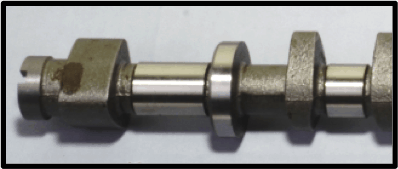
In order to start testing camshafts on the car, a blank camshaft is needed. This requires making a mold and casting a generic camshaft from a mold. Then the bearing services were machined to factory specs and after that a few dozen durations, ramp rates, and overlaps based on the engines natural pumping ability were chosen.
Blank Camshaft with Bearing Surfaces Ground
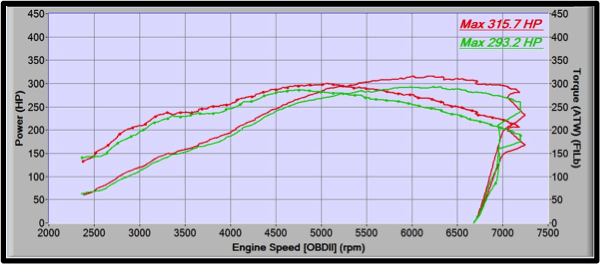
After carefully grinding all of the blanks, it was time to dyno the engine and determine the difference in power and torque.
An engine is basically a vacuum pump with the camshaft helping determine at what rpm the pump is efficient. Camshafts allow the power under the curve to be manipulated. If you have ever taken a calculus or thermodynamics class you might have flashbacks.
Power/Torque Factory Camshaft vs CorkSport Camshaft
Potential variations in the engine tune, fuel, outside temperature, and other factors were monitored. The result is clear improvements in power and torque throughout the rpm range. The final design was chosen to limit lower rpm power decrease with a large band of power improvement over 4,500 rpm.
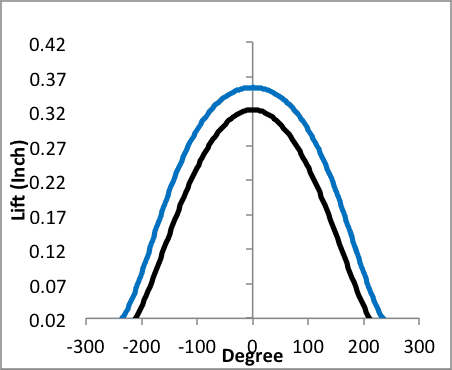
Exhaust Camshaft Comparison
Further examination of the exhaust lobe design is a good example of where the power comes from. When looking at the lift versus degrees as the cam spins, the changes to the lobe profile become apparent.
Exhaust Camshaft Design
This change allows the camshaft to lift the valve more and longer. This allows more air to flow out of the engine.
Intake and Exhaust Relationship
The intake camshaft is electronically controlled. With additional tuning, turbo spool and power can be increased by controlling the overlap between the intake and exhaust camshafts. Overlap is the time when both intake and exhaust are open at the same time. Typically in a turbo car overlap is much smaller than in naturally aspirated cars. Below shows intake and exhaust camshafts placed over each other and the area that would be considered overlap.
Diagram of Overlap
Fuel Pump Lobe
Recall the intake camshaft drives the mechanical HPFP. In order to allow the end user to have the best camshaft possible and also have reliable fueling and limited wear the fuel pump lobe on the CorkSport intake camshaft is ground to match the factory camshaft lobe and then rechecked to ensure no clearance issues.
Installation:
The installation of camshafts in the Mazda MZR engine is not easy. Camshaft upgrades should be considered by an experienced enthusiast or professional installation is appropriate. To aid an experienced installer, detailed installation instructions are provided. Successful installation is supported in two different ways.
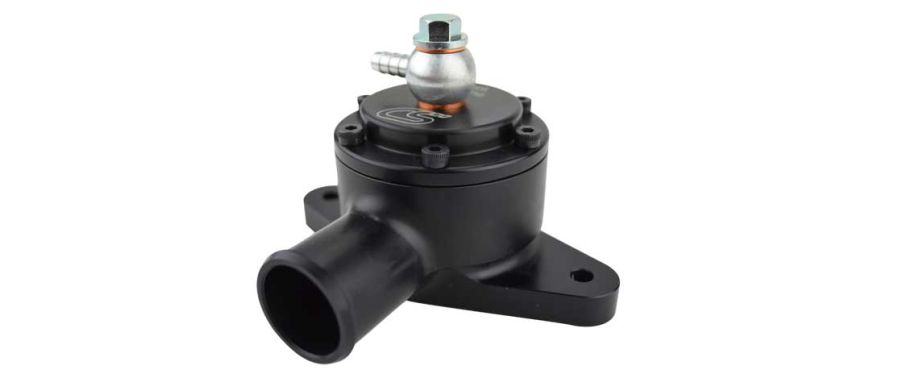
Many months ago here at CorkSport we decided it was time to bring a new high performance BPV to the market. The goal was to design a BPV that was compact, durable, and performed beyond just making noise; most importantly this BPV had to feature VTA functionality that was a right balance of daily driver friendly and performance. Ladies and Gentlemen, boys and girls, I give you the new CorkSport VTA BPV.
A beautiful picture of the outside looks nice, but does not even begin to show the many features designed into this BPV. Letโs take a look inside.
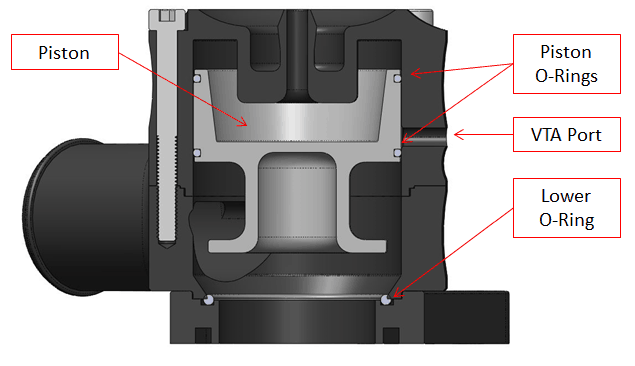
Figure 1: Cutaway view in idle position
Looking at the first cutaway view shown in Figure 1, youโll immediately notice the three O-rings. Two are located on the sides of the piston and one is located at the bottom of the piston. These are important for a couple reasons: the O-rings allow the piston to actuate/slide easily when combined with a proper lubricant and provide air tight seals in all piston positions. This allows the valve to hold 50psi of pressure without leaking.
I specifically identified the VTA portย because it location is critical to the BPV design and the drivability of the vehicle. In the idle position the piston sits at approximately the same position as shown above due to the vacuum pressure sourced from the intake manifold. At idle the VTA ports are closed, keeping your fuel trims in check.
Next, letโs look at the BPV in positive pressure (building boost) situation.
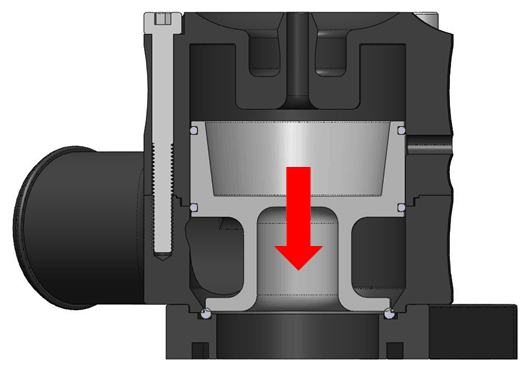
Figure 2: Cutaway view in positive pressure position
Immediately after applying throttle, the intake manifold begins to increase in pressure due to the turbocharger building boost. At the same time the BPV piston is forced closed as shown in Figure 2. Like the idle position, the VTA ports are closed keeping fuel trims in check. The piston also creates an airtight seal against the base flange improving boost response.
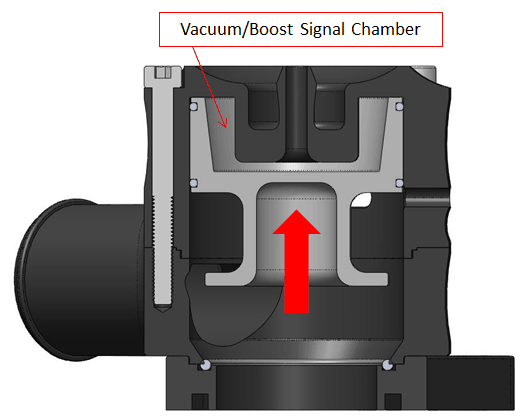
Next you shift or get off the throttle which causes a sudden pressure change in the intake manifold and the charge pipe pre-throttle body. The excessive pressure build up in the charge pipe combined with the vacuum from the intake manifold cause the piston to open as shown in Figure 3 below.
Figure 3: Cutaway view in high boost lift off position
Unlike the idle position, the piston has moved up past the VTA ports. This is due to the excessive pressure differential between the piston vacuum chamber and the charge pipe pressure. The greater this pressure differential the faster the piston will respond and vent more air to the VTA ports. Testing has shown that the VTA ports begin activating at ~15psi or greater boost pressures on a K04 Turbo equipped Mazdaspeed.
So thatโs how the CorkSport VTA BPV works, but what makes it so efficient in doing so? A combination of simple and effective features all wrapped up into one design.
Response is key to a great performing BPV, plain and simple. The piston inside the BPV must respond and accelerate extremely fast in order to reduce the pressure in the charge pipe and protect the turbocharger. Attaining that response comes down to simple physics in the form of Force = Mass * Acceleration. We can directly affect the mass of the piston via design and materials, which we were able to get down to a mere 38 grams w/O-rings. We can semi-directly affect the force required to accelerate the piston which various spring rates. Therefore by reducing the weight of the piston and optimizing the force applied to the piston we were able obtain a remarkable response time.
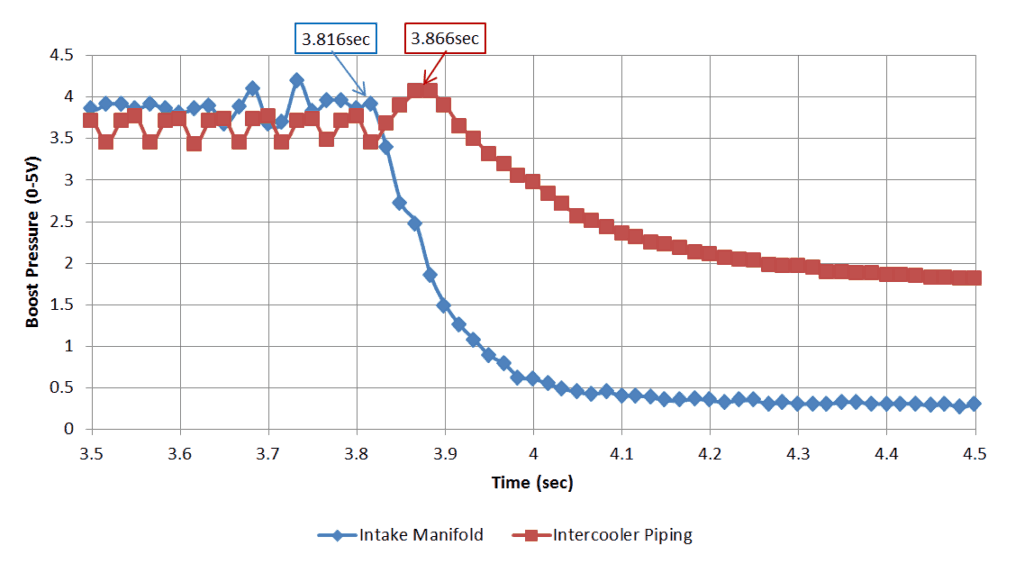
Figure 4: CorkSport VTA BPV response time during high boost throttle close situation
Looking at Figure 4, you can see two separate graphs shown. The blue graph shows the intake manifold pressure in a 0-5volt range. Boost pressure was leveling at ~23.5psi on a CorkSport turbo equipped vehicle. The red graph shows the charge pipe pressure just ahead of the throttle body approximately where the BPV is located.
During the test the car is held steady at ~6000rpm so that boost can level off for ~5sec, then the throttle is abruptly closed; this is shown in the blue graph with the sudden decay. This causes sudden vacuum in the intake manifold and increased pressure in the charge pipe pre-throttle body. The pressure delta causes the BPV piston to react and vent which is shown with the slight increase and then decay of the red graph. The response time of the BPV is time delta from the intake manifold going into vacuum and the BPV beginning to open and vent. The resulting time delta is a remarkable 50 milli-sec or 0.050sec in general terms.
The piston isnโt the only optimized part of the BPV. The piston design and the BPV cap were designed to work together. Looking at Figure 3 you can see that the hose barb fitting is integrated into the cap design and more importantly is โinsideโ the piston as much as possible. By reducing the volume of the vacuum/boost signal chamber in the BPV, we have reduced the total volume that must be removed from the chamber before full vacuum occurs and can begin moving the piston. You could compare this to โshot-gunningโ a can of beer. The tall boy is going to take longer than your standard 12oz right? Same idea with the BPV, but we are trying to shave milli-seconds.
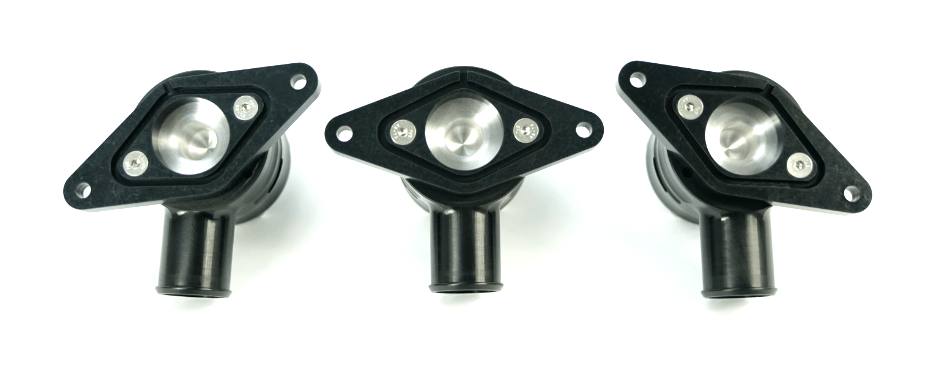
Figure 5: CorkSport BPV flange adjustability
Another awesome feature on the CorkSport VTA BPV comes in the form of installation flexibility. Not only is the BPV compact at just 2.50 inches tall, but the flange can be adjusted to a total of five positions. The center BPV in Figure 5 shows the typical position for a Mazdaspeed BPV. From there the flange can be adjusted 15 or 30 degrees clockwise or counter-clockwise to aid in installation.
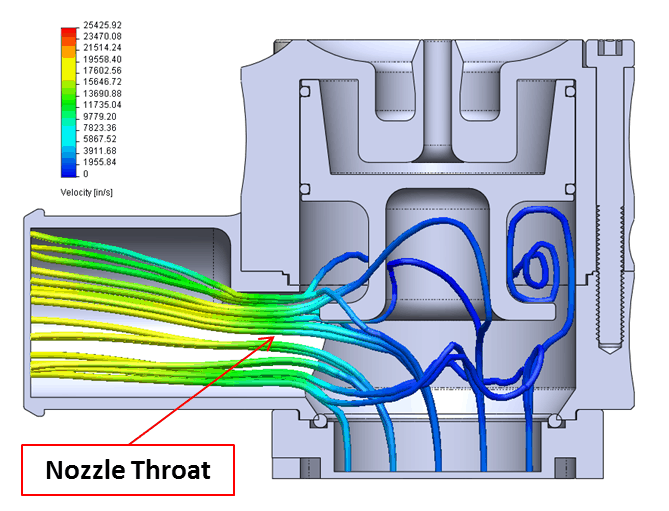
Figure 6: CAD flow simulation at ~220CFM with piston BPV fully open
Lastly, and arguably most important, the CorkSport VTA BPV flows great. Figure 6 shows a CAD flow simulation of the BPV fully open with inlet condition 23psia @ 110F and outlet condition 7 inches of H2O vacuum. Mach flow or commonly called โchoke flowโ is the situation when the air velocity reaches Mach 1. At this point no more airflow can be pulled through the BPV without increasing the pressure at the BPV inlet (charge pipe). In the CorkSport VTA BPV, Mach flows begins to occur at the nozzle throat shown in Figure 6. This is to be expected with the compact design and was a compromise made in the design process; however you will notice that the CAD simulation does not take into account the potential flow of the five VTA ports. These will only increase the maximum potential flow of the BPV.
To top it all off, the CorkSport VTA BPV makes an array of noises ranging from subtle whistles to loud whooshes. I invite you to check out the video found in the product listing as words just cannot give it justice.
We set out to design a high performing VTA BPV for the Mazdaspeed community that delivered with performance, style, and entertainment. We believe we delivered with a leak-proof, fast responding and glorious sound BPV. We hope you enjoy your new CorkSport VTA BPV as much as we enjoyed designing it.
-Barett
New Product: MazdaSpeed Dual VTA Bypass Valve May 28th, 2024Derrick Ambrose
In September, CorkSport participated in the SCCA Runoffs, the largest club race event held every year. In 2016, the Mid-Ohio Sports Car Course hosted the event in Lexington, Ohio. Having only raced there in a simulator, we spent two days testing at the track the weekend before and received coaching from Will Dodd, a local Spec Miata racer who has spent plenty of time getting to know the course. After trying several setup changes along with the awesome BFG rain tires for the first time on our Mazda 3, we felt pretty good about our odds of placing higher for qualifying.
Credit: Melissa K Lepper
The runoffs format is made up of four qualifying days followed by a one-shot, winner-take-all championship race. For the Touring 4 group there were 34 people entered, which made for great racing no matter where you were in the field. The T4 field also shares the qualifying session with the B-Spec class, which adds excitement catching up to them on the track with the higher top speeds of the T4 cars.
Credit: Melissa K Lepper
Qualifying session #1
On the out lap, an Rx8 blew a line off his oil cooler and laid down a puddle in turn two (aka the keyhole) and proceeded to drive down the straight before he went off in turn four. This meant heading into four you were staring at a car in the gravel, the fastest spot on the track heading into a heavy brake zone. Not a good place to go off. The session should have been called with the oil down but the stewards let us run around the track, which was a waste of time. The best time I managed was a 1:47.84 โ horrible for T4.
Qualifying session #2
The bad part about qualifying poorly in the first session is you are placed in order of speed from all of the days of qualifying. This meant I was sitting in 22nd behind several drivers I knew I could beat, and I would have to get a fast clean lap. After six laps I cleared the other cars and caught up to the B-Spec cars, which made me back off a bit. This was a bummer, since the predictive lap timer in the car showed I was on path to run a low 1:42 time.
The end result from Q2: I was in 18th with a 1:43.107. After the session was over, I was pulled into tech to make sure my car was in compliance with the rules. After 60 minutes of tech fun to make sure my car didnโt have a spool, the fuel was from the track, my ECU was stock, and we were cut free. Lucky for me they didnโt find the nitrous tank hidden in the trunk. (J/k)
Qualifying session #3
I went faster and was consistently in the 1:42s, but everyone else went faster as well. I slid back from 18th to 19th. Boo!
Qualifying session #4
Last chance to make a difference on Thursday. We went over the car setup and made sure we were in the best shape for starting higher in the field. In the end it didnโt make a difference. I got caught in traffic and struggled with the car. I was going to be starting 19th. There was one bright spot though: The top speed I hit was one of the highest at 120.8 mph going into turn four, which means I was exiting the keyhole carrying more speed.
Race Day
After getting new brakes installed on the car and running a hardship lap to make sure everything was good, we were set to race. Will noted that being on the inside at the start was a good place to pick up after going through Madness (corner five) and into six due to the track line and the width of the track. Being in 19th, I was on the inside to start.
Credit: Melissa K Lepper
The start went well; I got the jump on a few Rx8s and moved up a few spots heading into four with a Pontiac Solstice in tow behind me. So far so good. I got though turn nine and the Pontiac was able to carry a bit more speed than me, so he went around the outside โ a pretty hairy move but I saw him and left him space so he didnโt get run off the track. We proceeded to have a drag race when it happened. We made contact, and his right rear tire hit the side of my car at the driverโs door. We got wheel-on-wheel contact that spun him across my front and took his tire bead off. He went spinning off the track towards the wall.
I had hit the brakes so I wouldnโt punch his car in the door with the front of the Mazda 3. My car was pulling hard to the left; his hit wheel had punctured my left front. In a live track with a race going on, stopping is not an option. So in an effort to not cross the track to get to pit lane, I opted to pull into the middle of the track at turn 12 and park behind the wall to wait out the race.
I had my phone in my car, which prompted me to post this video while I watched the finish.
The other driver was able to pull into pit late. I was happy to see he did not hit the wall. I was able to talk to another racer I know who caught our contact on his camera. He was willing to share it with me.
This wasnโt the way any racer likes their week to end but it is racing. You never know what is going to happen out there on the track.
Derrick
How Not To End Your National Championship Race November 30th, 2016Derrick Ambrose
Back in the summer of 2013, I was looking to upgrade my lowly 2013 Mazda 3i Grand Touring to a Mazdaspeed 3. Unfortunately, my wife was not happy about having to learn stick โ and I donโt have the patience to teach her. Then a friend told me about the newly designed Mazda 3 coming out with the 2.5 motor. At the time, it wasnโt available, but the new 6 was promising. I decided to take the 6 for a test drive and fell in love. So began my CorkSport journey . . .
I love the way the Mazda 6 handles and how responsive the automatic transmission is, along with the beautiful interior. But there were things that bugged me that I wanted to fix. My goal was to have an โOEM+ rideโ that was not radically different from stock but still improved on some of Mazda’s original design.