Goodbye 323 GTX

Goodbye 323 GTX. Goodbye Cusco, GT Spec, Pedders, Autometer, Injen, Knightsports, KVR, RE-Amemiya, Mazdaspeed, and about 50 other product lines.

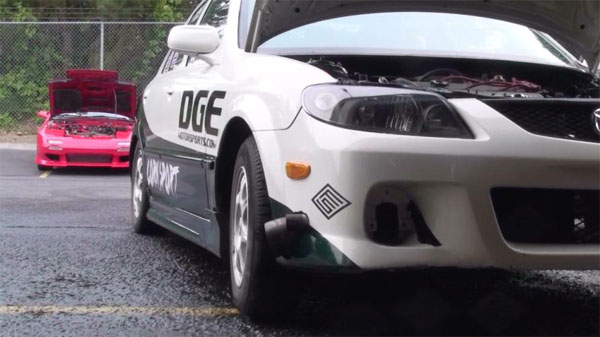
You may have noticed a recent news post announcing we are phasing out Mazda 323 GTX Parts. The 1988-89 GTX (in USA) was a great car for its time. Many owners have maintained and upgraded their cars to the point they are more powerful and better handling than some of the newest cars. A remarkable testament to the car considering it is over 20 years old!
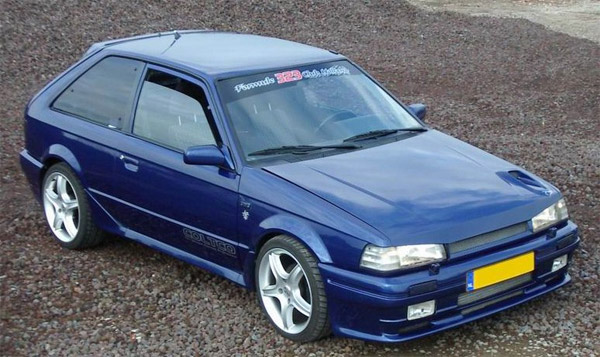
Unfortunately, there just arenโ€™t enough of them left on the road to justify further development and support. Sales have steadily declined for this car for many years. Ultimately, I think the recession was the last straw for us. Very limited inventory remains and we plan to remove this car from our catalog by the end of the year. To answer the most common question weโ€™ve received since the official announcement last week: โ€œYes, a few parts will likely end up in our clearance saleโ€. To reflect on the most common comment weโ€™ve received so far, โ€œYou Suckโ€; it is regrettable, truly. We donโ€™t like it either, but it was ultimately our customers that made the decision for us.

We are also phasing out many product lines, as I mentioned earlier. Border, RE-Amemiya, Mazdaspeed, Knightsports, and FEED are venerable Japanese brands. They have always been slow movers for us, have long lead times for our customers, and sales volumes donโ€™t support keeping parts in inventory. Japanese quality is exceptional, truly, and if you have the taste (and wallet) for these parts we are confident youโ€™ll find a way to get them.

Brands like Injen, Centerforce, KVR, NGK, Unichip, Koyo, and Greddy have many products that are redundant to our own catalog. We are committed to making CorkSport parts the best value on the market but we donโ€™t make everything. Weโ€™ve selected a few partners to fill out our product line. The remainders are being dropped from our catalog.

Weโ€™ll be launching a new approach to business early next year that builds upon our reputation for high quality parts at an excellent value and supported by the best customer service in the industry. This plan requires a commitment we cannot maintain while serving sales of other brand names. When you think โ€œCSโ€ will you think โ€˜customer serviceโ€™ (pardon the lame humor)? We hope so.

There are no gimmicks here. We donโ€™t trademark some odd spelling of a performance sounding words to trick you into believing your getting technology that is different from everything else out there. You are smart enough to recognize that sort of marketing. We could try gimmicks like free shipping but that means we inflate our prices to cover the cost (and thus it is not free to you) or we erode profits and have less opportunity to use them to serve you better. Better to know what you are paying for in my opinion.

Our goal is value. Price, quality, support before/during/after the sale, shipping, packaging, and warranty all go into the value equation. We are focusing our product line in order to offer better value to our customers through improved customer service and support.

Please send us your feedback. We promise to read and consider all of it.

– Rich
Upgrading Your Engine

Just like the suspension on your Mazda, you need to have a plan when upgrading your engine. There are several areas to consider when upgrading the existing engine in your Mazda and all play a big part. If you were to call me up and ask โ€œWhat should I do with my engine in my Mazda?โ€, I would ask you what you are going to be doing with it. There is a laundry list of components in your engine, and when added up can range from several thousand to tens of thousands of dollars. We are going to stick with piston engines for this article. Sorry RX-7 guys!

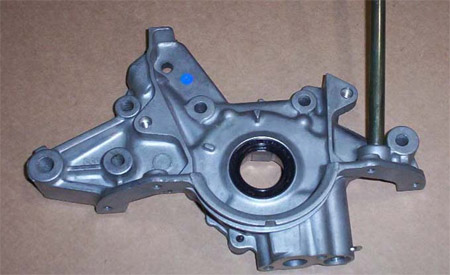
Starting with the base of the engine the block is the center of everything. Oiling is handled in the engine block which then feeds the cylinder head and in some cases the turbocharger or supercharger. One thing I tell people is when doing any work with the block or bottom end of the motor is to change the oil pump with a new one. Why risk several thousand dollars of a newly built engine on a critical component. If the oiling system fails it can mean throwing out everything and starting over, which no one wants to do. If an upgraded oil pump is available purchase it.


Mazdaspeed Oil Pump for the B6 DOHC

Located in the engine block is the crankshaft. Mazda has been good with supplying most engines with a strong crankshaft. I recommend that you have the stock crankshaft inspected if it is out of the engine. Options for upgrading the crankshaft are cryo-treating and shot peening (stress relieving).

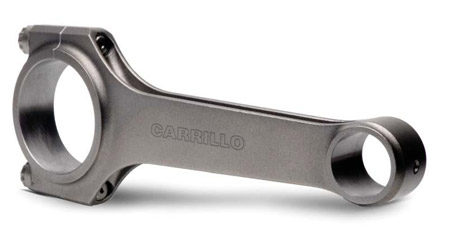
Connecting rods are also located in the engine block. They attach the crankshaft to the pistons. Thankfully, if there are no upgraded connecting rods on the market you can have some made. Most manufacturers of rods will custom build a set if you send them one of your stock rods. When choosing a connecting rod there is two general paths. If you are going with an engine that will not see forced induction you can normally go for a lighter rod which is made from better materials than stock. If you are going with forced induction you will want a connecting rod which is sturdy and can survive detonation in the event a mistake happens.


Carrillo Connecting Rod

Pistons play a big role in how your engine is going to be used. Lower compression pistons are normally used with forced induction engines. High compression pistons are good for a normally aspirated build. With EFI systems both stock and aftermarket making use of knock sensors, it is possible to build a forced induction engine with a relatively high compression engine. Regardless of the compression ratio, forged pistons are the strongest. There are also squeeze cast pistons which are strong as well but not quite as tough as the forged pistons. Some high compression pistons are squeeze cast which results in a lighter piston, and can be strong enough for high RPM use.

Engine bearings can make or break your motor. We recommend the best quality bearings you can buy. Factory Mazda engine bearings are really good as are some aftermarket brands like ACL. For setting clearances of the bearings make sure you speak with your engine machine shop to see what they recommend for your application. Most performance machine shops have years of experience and can provide you pointers for the assembly of your engine.

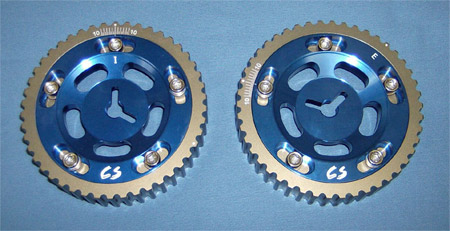
Cylinder heads carry several parts to look at for a build. Camshafts need to be selected to match your engine build. Normally aspirated performance camshafts and forced induction camshafts have different timing and lift profiles. I recommend speaking with the manufacturer of the camshafts to make sure they will be appropriate for your engine. Installation of performance camshafts may require upgrading the valve train. Some require valve springs to be upgraded along with the lifters and retainers. Again speaking with the manufacturer of the camshafts is a good idea. Performance machine work of the cylinder head should be looked at. Porting your cylinder head for better flow, volume, or efficiency should be looked at as well, as it can get you more gains from the camshafts and other upgrades. Adjustable camshaft gears give you another option for doing fine tuning in your engine. Cam gears can let you extract the last bit of power from your engine with cam tuning.


CorkSport Camshaft Gears for the B6/BP DOHC Engines

Upgrading the fasteners should be considered when upgrading your engine. Critical components like the cylinder head bolts and main cap bolts can be upgraded with a stronger fastener like ARP studs. The advantages they offer besides strength is the ability to re-use them multiple times without fatiguing the hardware.

Manifolds for both the intake and exhaust need to be selected to match the use of your engine. Manifold lengths can affect the power band of the engines. Shorter runners on intake manifolds are normally better for mid-high RPM engines and longer runner manifolds normally develop lower end power and torque. Exhaust manifolds in non turbo motors can be setup for different power bands as well. 4-1 headers are generally for mid and high RPM power. 4-2-1 manifolds are better for mid range power. Turbo manifolds range from log style to elegant custom tubular creations. I will cover more on turbo manifolds in a later post.

Gaskets are the last part of the engine I will cover. Mazda supplies most of the engines with good gaskets from the factory. There are exceptions to look at for a few of the engines like the FS engine in the 99-03 Protege. The factory head gasket is ok, but better parts are available. Upgraded head gaskets from companies like Cometic are available for several Mazda engines including the DISI, FS, and the B6 DOHC/B6T.

Make sure you take a look at all of these areas when upgrading your engine to get the best results. All of the areas listed above, the block, oiling, rods, pistons, gaskets, fasteners, and bearings work only as well as the other parts in the engine. Selecting an exhaust manifold for top end power and not getting the higher compression pistons to get the most for the header can sell your build short. Send us an email if you have any questions on building your Mazda, we have years of experience and would be happy to help.

– Derrick

CorkSport Contingency Program

After spending some time with a number of Motorsports Marketing minds at the SEMA show last month, we have been contemplating starting a CorkSport Contingency Program to help sponsor successful enthusiasts who are out there campaigning their cars in activities such as AutoCross, Drag Racing, Rally Cross, etc. The program would work similar to other contingency programs with decal placement requirements, sign up in advance and a schedule for contingency awards based on being enrolled in the program and achieving a specified goal.

With this in mind, we’re looking for your input. If you’re a racer and would like to see your sport be the initial run for our CorkSport Contingency Program, drop us a line and let us know.

Jason

Get Your Swap On

I frequently get calls asking โ€œWhat should I do with my car?!โ€ and asking what engines a customer can swap in. Engine swaps are a good thing to think about, but there are a wide range of items to consider before you decide on doing a swap. Doing an engine swap can be a simple bolt in to the factory mounts or as sophisticated as having to notch the frame rails, fabricate all of your own mounts, custom axles, and major wiring. There are several things to consider. Will the new engine get you the power you want? Will the engine fit? Will it work with the transmission in your car? Will the swap require different wiring? Has anyone done the swap before? Do you need to pass emissions, and if so will your swap pass emissions?

The first thing to take a look at is whether or not someone has done this swap before. This can help you get the job done quicker and help you avoid hidden problems that someone else has already encountered. The internet makes checking to see if someone has done the job before much easier than in the past. Forums are also another big help, and a great place to look. Not everyone publishes an engine swap but if you can find someone on a forum who has done the job they might indulge you and offer up a few pointers. Letโ€™s look at the big picture: If the engine you are installing requires everything to change, like the engine, transmission, wiring, axle, shifter, etc. there is probably going to be a lot of time and money involved with the swap.

Engine fitment is what you should look at next. If the engine youโ€™re planning to swap wonโ€™t work with your transmission, make sure you get the all dimensions of the engine and transmission together. One dimension to remember is the height which often gets overlooked. The engine will move in the engine bay and the last thing you want to do is get the engine installed and then discover your engine hits the hood under acceleration.

If the engine you are mounting is not a bolt in make sure you take a look at how the new engine mounts. Find engine bay pictures online or a car to look at with the engine factory installed. Most manufacturers like Mazda keep similar mounting points. There are exceptions to engine mounting so you need to make sure you address this. If you are installing a different transmission with your engine, look at the mounting for it as well.

Transmission mounting is critical. You need to have the transmission located perfectly to get the axles to line up. Check and see how the new transmission is shifted. Does it use a cable shifter or a rod shifter mechanism? How does the clutch operate if it is a manual transmission, hydraulic or cable type? Are the axles larger in diameter and do they have a different spline count? You might have to consider getting custom axles done if you are not able to find a bolt in part.

Cooling is also an important item when considering a swap. Do the radiator hoses come close to lining up with your radiator? Does the radiator you have carry enough capacity to cool the new engine? Forced induction engines will generally require larger radiators. If the new engine is turbocharged, make sure you remember that you will need an intercooler and a place to run piping for it.

Wiring is the part that scares most people out of doing an engine swap. Most swaps are using engines from newer cars and thus include some extra systems that your car may not have in it. Make sure you have the wiring books for both the cars you are swapping the engine from and to. Engine wiring normally is the most difficult. If you can get the engine wiring that belong to the new engine it will make the job easier. Sensor changes, plug differences, and wiring routing all are important items to look at. A nice side advantage to keeping the newer wire systems is emissions. This can also be a drawback with OBDII systems and the level of complication they can present. Most states will allow you to swap to a newer engine if you keep the emissions controls intact. Make sure you check with your local EPA for emissions info before you do the swap.

Exhaust is the last thing I will cover. It is normally straight forward to get the exhaust connected up to the existing system on your car, if it is adequate for the new motor. If it is not, look at building or getting a new one built. Make sure to add a catalyst if you are going to be driving your car on the street and required to pass emissions.

To review the swap check list:
Engine fitment
Transmission fitment
Cooling
Wiring
Exhaust

So have I scared you off? The items I have brought up above are all things I have learned from experience doing engine swaps. My goal is to make sure you have everything covered before you start a swap. I have had quite a few calls of people wanting to swap a DISI MZR engine into Proteges, MX-6s, and other cars. I think this will be the next big swap we see once someone takes on the challenge.

Derrick

Final Reflections on SEMA 2009

Every year at this time, as the year draws to a close, we have an opportunity to reflect on the past and set some new resolutions for the coming year. For our business, I call this event SEMA. We wrapped up our annual visit a few weeks ago and now Iโ€™ll take some time to reflect on what we observed, learned, and have otherwise taken from the show to better position us to serve you.

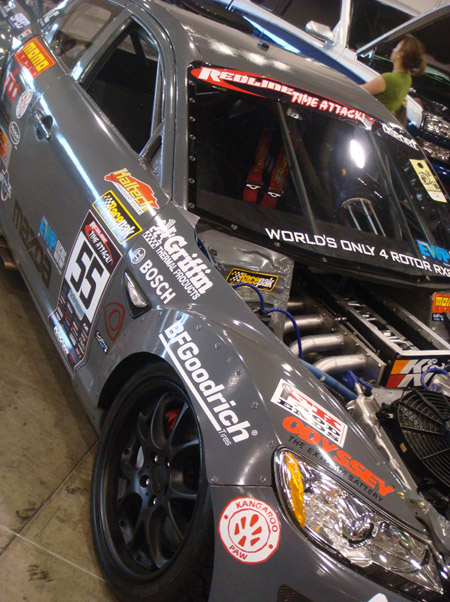
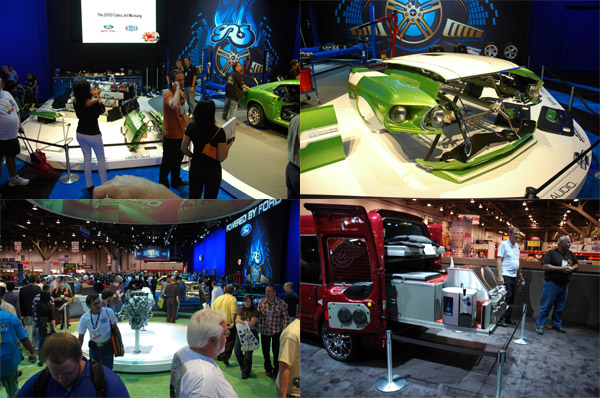
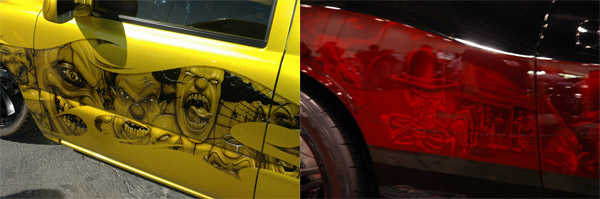
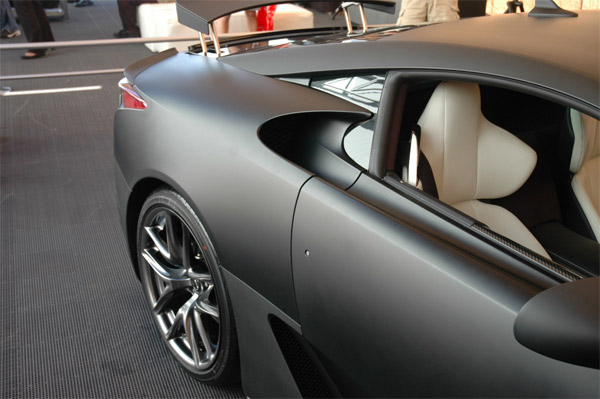
First, what we observed, much of the same as in previous years albeit with a renewed optimism buoyed by the recovering economy; lots of tricked out cars (mostly exotics, Camaros and Mustangs). Compact performance seemed to take on a lesser role at this years show. This is certainly true with respect to Mazda. They didnโ€™t have a booth this year or any formal presence as far as I could tell. Iโ€™m curious why Mazda did not participate. No matter the reason, it made for a less interesting show. Ford did an excellent job this year. You might expect this since they were the headline sponsor, but I was surprised. Their effort to appear as a financially strong domestic brand, separated from the troubles of GM & Chrysler, was enhanced by this strong showing.

I didnโ€™t observe any substantial emerging trends in compact performance. Aside from the consumer electronics side of things, none of the new products really stood apart from the crowd. On the marketing side of things one clear trend has emerged in the larger industry, nostalgia based marketing. Itโ€™s based on capturing those warm feelings we have of when life was simpler and using them to motivate us to buy cars or upgrades for them. Or perhaps, if you buy a car that looks like your pops or some parts from a company that existed when he was a younger man, youโ€™ll rekindle that connection you had as a young child when your father was working on his car in the garage. Thatโ€™s the idea anyway.

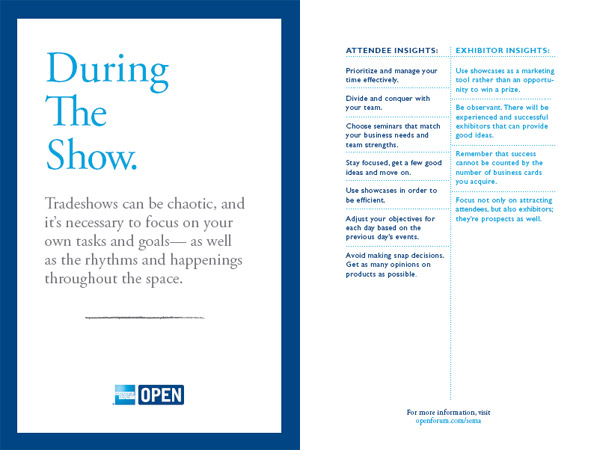
We shut down our shop so that most of our staff could check out the show. What did we learn? Plenty. The seminars can be a great way to add tools to your toolbox. If you go to next years show, take some time out to rest your feet, and attend a seminar. We attended all sorts of seminars. One important point I recall from a seminar is that the brand paradigm has shifted. We no longer own the CorkSport brand. We share it with you. Out there in cyberspace, you do as much to build our brand as we do, perhaps more. This idea perfectly encapsulates how we approach things here. Check out this helpful tipbook, it is worth a look if you plan to go to SEMA next year.


We also learned from exhibitors. They are generally very willing to help and will give surprisingly revealing answers if asked the right questions. Some of the vendors participate in the seminars. This gives even more insight into the inner workings of those companies.

We took time everyday to reflect on the show as a group and record our ideas. As such, we took home lots of great ideas. Everyone loves video, weโ€™ve already got a bunch of them here, and here . We got some great tips on how to make better videos and where to put them to make sure the most people see them.

How about our website? Are you finding what youโ€™re looking for? Weโ€™ve largely received positive feedback on the redesign of our site. We learned about new tools to help us make sure you can find what youโ€™re looking for.

We found several innovations in MAF sensors and manipulation of their signals to allow for customization. More and more cars come with these sensors now. As we push our MZR motor well past the 300 HP level, weโ€™ll likely incorporate some new MA configurations. If successful, youโ€™ll see these as new CS products next year.

The list goes on and on. We hit the show with a plan. We checked out the show as enthusiasts, learned some things about the industry and techniques to serve you better, and took home a long list of follow-ups. Whether you are a lifestyle enthusiast or performance enthusiast we think youโ€™ll enjoy a trip to Las Vegas next year for the 2010 SEMA show. Weโ€™ll see you there.

– Jason